Services
New Home Construction (Stage) Inspections
A Registered Builder, Star Building Inspections is independently owned and operated providing a wide range of professional Building and Pest Inspection services across Melbourne’s West. Rapid Service, fixed pricing and same day reports. We offer great value. You will experience personalised, professional and helpful service you deserve. That’s the Star Guarantee.

The Inspection
New home construction (Stage) inspections are conducted in 5 critical stages of construction by a Registered Builder, your Inspector, who carefully reads through the plans and specifications prior to starting the Inspection. We thoroughly check that all works have been carried out as per the Engineering Plans and Architectural Drawings, provided by your builder, and in accordance with the National Construction Code and Australian Standards.
We often find defects overlooked in new home constructions by building surveyors/inspectors as their running from job to job. At Star Building Inspections, we concentrate on one job at time, allowing us to thoroughly inspect and report accurately, every time protecting your asset.
Your inspector will guide you through the whole Stage Construction process from the time of your booking to completion/handover including communicating with your builder on time lines and construction progress. We’re here to help you every step of the way. Why not make it a stress free experience and book with Star today.
Unlike most other companies, at Star, our personalised service gives you the opportunity to deal with 1 person, the inspector, from start to finish. We welcome you asking as many questions as you want, even if it’s day’s after the inspections.
Stage 1 — Pre-Slab Steel Inspection
We often find major defects in the construction, materials installed and inferior materials used, not conforming to the Structural Engineering plans provided by your builder, National Construction Code and Australian Standard we inspect and report by.
We like to inspect the job just as the concreters are finishing up, this gives us time to inspect the works and ask the concreter to rectify any defects found.
If these defects are not rectified, major structural issues will start to appear at some point in your home, causing huge financial losses. Why take the risk? Book your inspection today.
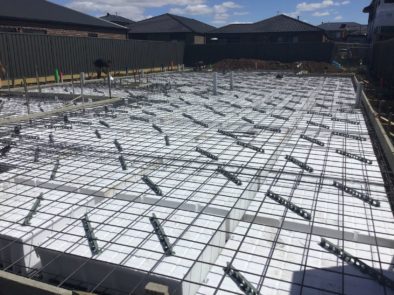
Your Pre-Slab pour inspection, will be carried out in accordance with the Structural Engineering plan provided by your builder, the National Construction Code and Australian Standard AS2860, (Residential Slabs and Footings).
During the inspection, we visually check the following:
- Form work layout.
- vapour barrier installed correctly
- Service pipes are correctly positioned
- All steel reinforcement materials comply as per the plans
- Form work and service pipes are clear of steel reinforcement materials
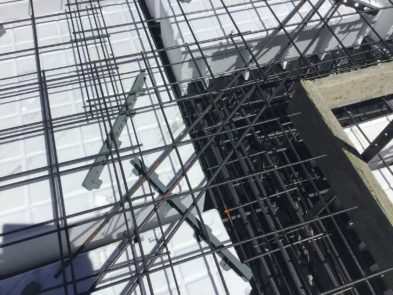
- All steel reinforcement materials are layed and tied correctly
- Steel bars are lapped and laid correctly
- Depth of overall slab height to all areas
- Depth and width of edge and internal beams.
- Depth of rebates
- Steel bars are lapped and laid correctly
- Waffle pod designs only: We count the amount of pods against the plans
- Re-entrant bars are measured and checked
On completion of your inspection, the inspector will complete a comprehensive, detailed report, including photos of construction and email you the report. same day guaranteed. You inspector will personally call you to discuss the report and progress of construction.
Typical Slab Layout, prior to concrete pour.
Stage 2 — Timber Frame Inspection
We often find major defects in the construction, materials installed and wrong materials, not conforming to the Structural Engineering and Architectural plans provided by your builder, National Construction Code and Australian Standards, that we inspect and report by.
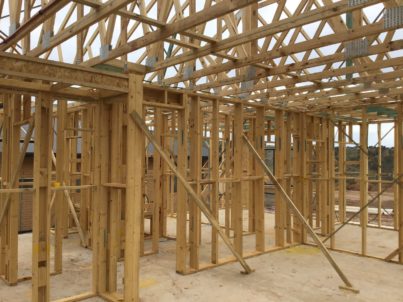
Some of the more common issues we find include framing overhanging the concrete slab, wall bracing loose, frame not built to specifications and defective timbers, main anchor points between concrete slab and timber frame not secured, poor workmanship.
We like to inspect the job just as the carpenters are finishing up, this gives us time to inspect the works and ask the carpenters to rectify any defects found. If these defects are not rectified, major structural issues will start to appear at some point in your home, causing huge financial losses. Why take the risk, book your inspection today.
We check that all works have been carried out as per the Structural Engineering Plans and Architectural Drawings. provided by your builder, and in accordance with the National Construction Code and Australian Standards (S 1684 –4) Timber Framing
During the inspection, we visually check the following:
- Concrete slab edges are not exposing structural steel work.
- Frame overhanging the concrete slab
- Wall framing materials, fixings and fittings
- Bracing to all areas including roof trusses.
- Roof truss layout, installation and fixings
- Structural Steel beams including fixings and fittings
- Structural Steel supports including fixings and fitting
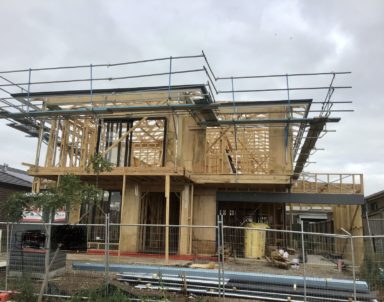
- Flooring in 2 story construction
- Landings in 2 story construction
- Window frames and flashings.(if fitted at the time of inspection)
On completion of your inspection, the inspector will complete a comprehensive, detailed report, including photos of construction and email you the report. same day guaranteed. You inspector will personally call you to discuss the report and progress of construction.
Typical Frame Stage Inspection
Stage 3 — Lock up/pre-plaster inspection
Lock Up/Pre-Plaster inspection is your final opportunity to check the frame, just as important, defects previously reported on in the frame inspection, have been rectified as per your report.
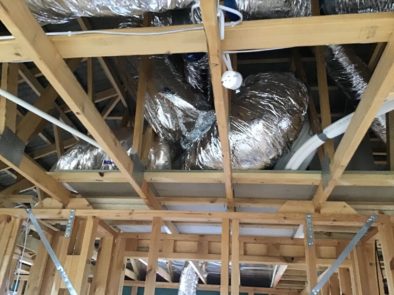
New defects are always found, due to trades like, plumbers, electricians, heating and cooling installers etc, carrying out their rough-in which includes, running copper pipes and wiring unintentionally damaging framing members as they go. All defects need to rectified before the plaster is installed and the defects are hidden and become a major problem in the future. We protect your asset every step of the way.
Your inspector will thoroughly read through the plans and specifications before starting the inspection checking that all works have been carried out as per the Structural Engineering Plans and Architectural Drawings. provided by your builder, and in accordance with the National Construction Code and Australian Standards (S 1684 –4) Timber Framing.
During the inspection, we visually check the following:
- All previous defects from the timber frame inspection have been rectified as per the report.
- External wrap/sarking has been properly installed and presents no holes or tears in the material.
- Tiled or metal roofing installation (also checked at Handover/practical completion inspection)
- Trades have completed their rough-in
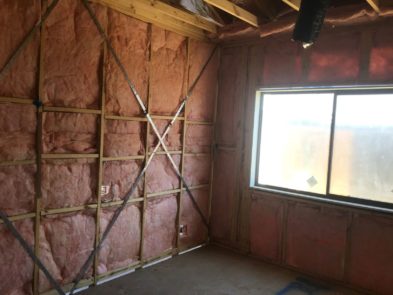
- Insulation batts are fitted and .
- Window frames and flashings if fitted at the time of inspection.
- Guttering and fascia’s (also checked at handover/practical completion with the roof tiles)
- Brickwork, mortar and articulation joints if the brickwork has been completed.
On completion of your inspection, the inspector will complete a comprehensive, detailed report, including photos of construction and email you the report. same day guaranteed. You inspector will personally call you to discuss the report and progress of construction.
Typical Lock Up Inspection Showing Wall Insulation and Ducting.
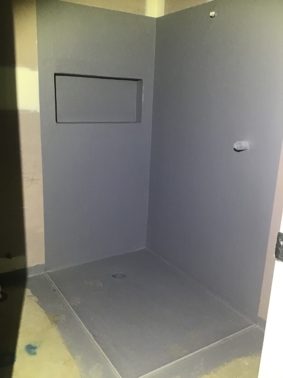
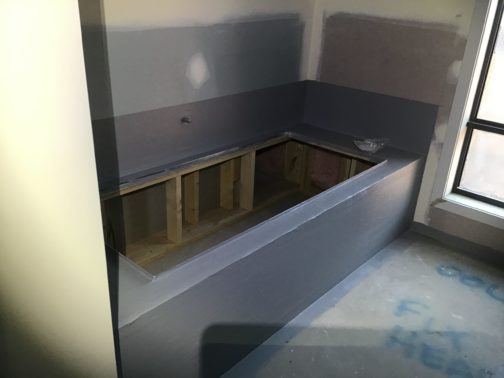
Stage 4 — Fixing Stage / Waterproofing Inspection
Fixing/waterproofing inspection is considered as two different stages, but both are completed at the same time now ready for painting and tiling, so we combine the both together.
A waterproof membrane is essential in wet areas both for floors and walls. Coverings such as tiles or vinyl do not provide an adequate level of protection by themselves.
Wet areas such as bathrooms, showers and laundries can be a real challenge for ensuring timber framing & flooring, insulation materials, electrical wiring and internal cladding materials are not exposed to damaging water ingress.
We quite often find incorrect installation of waterproofing from untrained contractors. If not identified and rectified before tiling and painting are completed, waterproofing failure will require expensive repairs and remedial action.
We check that all works have been carried out in accordance with the Plans, Specifications, Australian Standards and National Construction Code.
During the inspection, we visually check the following:
- All joinery including architraves, skirting boards, door jambs, vanities and kitchens
- Plasterboard and cornice installation
- Waterproofing completed and compliant
- If two story, stairs and landings
- Check that all items from the last inspection have been rectified
On completion of your inspection, the inspector will complete a comprehensive, detailed report, including photos of construction and email you the report. same day guaranteed. You inspector will personally call you to discuss the report and progress of construction.
Typical Water Proofing to Bathrooms
Stage 5 — Handover Inspection/Practical Completion Inspection
Congratulations, it’s time to complete your final stage inspection and take possession of your new home!
Knowing the home has been professionally inspected by Star Building Inspections and constructed in accordance with the National Construction Code and Australian Standards, gives you peace of mind that your asset is well protected.
The builder may tell you your home is 100% complete and ready to move into, but this may not be the case. It’s important that you attend the inspection and walk through the home with your builder while your inspector is scrutinising the the quality of finish and workmanship that the home owner will understandably overlook because only a person with years of building knowledge and experience would no were and what to look for.
During the inspection, we visually check the following:
Interior
- Paint finish and Blemishes
- Ceilings and walls
- All floor coverings are correctly layed
- All door handles and doors, including hinges,
- Windows open and close
- All joins to wet areas have been sealed
- Floor and wall tiles for chips and cracks
- Test all taps and check for leaks.
- Check all cabinetry in kitchen, bathrooms and laundry
- Wall & floor tiling
- Sliding doors
- Insulation in roof space
- Stairs and landings (2 Story Homes)
- Balustrade (2 story homes)
- Overall quality of the finish and workmanship.
Exterior
- All concreted areas including driveway.
- Brick work, including articulation joints sealed and motar joints
- Render
- Roofing, tiled or Colourbond
- Fascias and gutters
- Down pipes secured to brickwork
- Storm water pipe connections.
- Windows
- Garage doors.
- Concrete floor in garage.
- Garage ceilings and walls
- Landings if 2 storey.
On completion of your inspection, the inspector will complete a comprehensive, detailed report, including photos and email you the report. same day guaranteed. You inspector will personally call you to discuss the report.
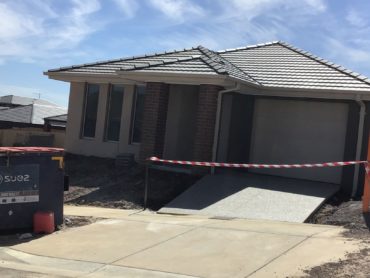
Typical Handover Inspection
Building a new home with a volume or boutique builder is a long, structured process — and the inspections your builder runs are not for your benefit. Independent stage inspections melbourne owners commission protect the one person whose money is at risk: you. Star Building Inspections runs owner-engaged inspections at every key construction stage, from base/slab through to handover. Michael Tuder is a Registered Builder with the VBA and has 30+ years of on-the-tools experience. Every inspection is conducted personally to AS4349.1-2007 with a same-day photo-rich PDF report.
In short: Stage inspections are independent owner-engaged checks at the five major points of new home construction — base, frame, lockup, fixing, and practical completion. Star Building Inspections inspects to AS4349.1, identifies builder defects before they are covered up, and gives you a same-day photo-rich PDF report you can lodge with the builder. Conducted by a Registered Builder with 30+ years of experience. Fixed-fee per stage — see /pricing/.
Why stage inspections matter
Volume builders run on speed and margin. The site supervisor manages multiple jobs, the trades rotate fast, and quality control is whatever the builder’s own QA inspector signs off. That inspector works for the builder, not you. Their incentive is to keep the job moving.
Defects covered up at frame stage do not disappear — they sit hidden behind plaster for ten years before a leak, a crack, or a floor squeak shows where the corner was cut. By the time you find them, the builder has moved on, the warranty argument is harder, and the rectification cost is yours.
An independent stage inspection puts a Registered Builder on site at the moment a defect can still be fixed cheaply. Five well-timed inspections across a 9–12 month build catch the issues that matter — structural, waterproofing, fire-rated, weather-tight — before they are buried.
The five standard stages
Stage inspections follow the construction sequence. Each stage targets the work that becomes inaccessible at the next stage.
Stage 1 — Base / Slab
Inspected after the slab is poured and before frames go up. Sometimes split into a pre-pour and post-pour inspection.
What we check: – Slab dimensions match the plans – Set-down for wet areas, garage, alfresco – Edge beams, internal beams, piers (if waffle pod or M/H slab) – Reinforcement (pre-pour) — bar size, spacing, chairs, laps, top mesh – Vapour barrier and termite management system – Penetration locations — plumbing rough-ins, electrical conduits – Slab finish — flatness, cracking, curing – Site drainage and finished floor level vs surrounding ground
The slab is the foundation of everything that follows. Errors here propagate through the build.
Stage 2 — Frame
Inspected after framing and roof trusses are complete, before any wall lining or roof cladding goes on. This is the most important early-stage inspection — every structural element is visible, and every defect is fixable in hours rather than days.
What we check: – Wall frame plumbness, straightness, height – Stud spacing, top and bottom plates, lintels – Roof truss installation, bracing, tie-downs to AS1684 – Wet area floor blocking, noggins for fixings – Window and door openings — size, square, head heights – Sub-floor (if elevated) — bearers, joists, anti-rot, ant capping – Wall and roof bracing — type, location, fixings – Tie-down hold-downs at slab and at top plate – Compliance of any engineer-specified beams or posts
Frame stage defects are the most common and the most consequential. Missing tie-downs, undersize lintels, and wrong-spec brackets show up in the majority of new-home inspections we run.
Stage 3 — Lockup / Pre-Plaster
Inspected after the roof is on, the windows and external doors are installed, and the building is weather-tight, but before plaster goes up. The home is still open inside — every wall cavity, every junction is visible.
What we check: – Roof installation — flashings, valleys, ridge, sarking, eaves – Window and door installation — flashings, head and sill, weather seals – Wall wraps and cavity flashings – Plumbing rough-in — waste falls, pipe sizes, lagging, brackets – Electrical rough-in — cable runs, GPO and switch heights, smoke alarm wiring – Insulation — wall and ceiling, R-value, fitting quality – Wet area waterproofing prep — substrate, membrane (if applied at this stage) – Termite collars and protection at penetrations
Lockup is the last chance to see what is going behind plaster. Once linings go up, hidden defects become invisible until they fail.
Stage 4 — Fixing / Pre-Paint
Inspected after plaster, skirtings, architraves, doors, cabinetry, and tiling — but before final paint and final fix electrical/plumbing. Effectively the second-last inspection.
What we check: – Plaster — bowing, cornices, joints, screw pops, finish – Skirtings and architraves — mitres, gaps, fixings – Internal doors — operation, locks, gaps, latching – Tiling — lippage, grout, falls in wet areas, tile cuts, silicone – Cabinetry — alignment, drawer/door operation, gaps – Stairs and balustrades — fixings, gaps, height compliance – Wet area waterproofing (visible indicators) — falls, hobs, junctions
Fixing-stage defects are workmanship issues. They do not threaten the structure, but they degrade the finish and they are what the owner lives with for decades.
Stage 5 — Practical Completion (PCI)
The most important inspection of the build. The Practical Completion Inspection (PCI) is your last opportunity to flag defects before you sign off and take possession. Once you sign the practical completion notice, the builder’s obligation shifts to warranty repair only — and warranty disputes are slow, contentious, and frequently end up at VCAT.
What we check: – Every defect from prior inspections, confirmed rectified – All finishes — paint, tiling, cabinetry, joinery, render – All operation — doors, windows, locks, taps, drains, appliances – All compliance — smoke alarms, balustrade heights, glazing, pool fencing if applicable – All weather-tightness — flashings, seals, drainage, gutters – Site — landscaping if contracted, driveway, paths, finished levels – Documentation — certificates of compliance (electrical, plumbing, energy), warranty information, manuals
The PCI report becomes the defects schedule that the builder rectifies before final payment is released. Lodging it formally — in writing, with photos, dated — is what makes the warranty argument winnable.
We’re Working with



Why an owner-engaged inspector beats the builder's QA inspector
The builder’s QA inspector works for the builder. Their job is to certify the build to the contract — not to scrutinise it. They have signed off on hundreds of homes for the same builder. Their bias is built in.
An owner-engaged Registered Builder has no relationship with the builder, no commercial pressure to keep the job moving, and no incentive to overlook defects. We find what the builder’s inspector misses — not because the builder’s inspector is incompetent, but because they are looking at the build from the builder’s side of the table. We are sitting on yours.
A registered builder also brings something a generic inspector cannot: the knowledge of how the work should have been done, because we have done it. Reading framing plans, identifying engineer-specified members, spotting the wrong fixing in a wind-load bracket — these are builder skills, not checklist skills.
Common builder defects we find at stage
The recurring defects across western Melbourne new-home builds:
- Frame: missing tie-downs at top plate, undersize lintels, off-spec wind bracing, splits and knots in critical members, wall frames out of plumb
- Lockup: poor flashings around windows, sarking torn or missing, insulation missed at corners and around services, plumbing waste lines with insufficient fall
- Fixing: plaster screw pops in long ceilings, mitres opening up at architraves, lippage on floor tiles, hairline cracks at silicone joints, doors binding
- PCI: paint touch-ups missed, scratches on finishes, taps not aligned, locks not catching, smoke alarm wired but not commissioned, missing warranty documents
The same defects show up across builders. The reason owner-engaged inspections work is that builders behave differently when they know an independent inspector is coming.
How to use the report when raising defects
The report is your evidence. Lodge it with the builder formally:
- Email the report to the site supervisor and the builder’s customer service or warranty contact.
- Reference the contract clause covering defect rectification.
- Set a reasonable timeframe for rectification (typically 21–28 days for non-structural items, longer for structural).
- Request written confirmation of the rectification plan.
- Schedule a re-inspection of the rectified items at the next stage or at PCI.
If the builder disputes findings, the report — photo-rich, dated, AS4349.1-aligned, and signed by a Registered Builder — carries weight at VCAT. Owners who go to dispute without documentation lose. Owners with a stage-by-stage paper trail win or settle.
New Home Stage Inspections Melbourne West
New home stage inspections Melbourne west — independent VBA-registered builder reports at every critical build stage so the defects you spot are fixed under warranty, not after settlement.
- Safety Issues
- All wet areas including moisture tests
- Roof Space/Void Internal
- Insulation
- External Roof
- Subfloor, framing & stumps
- External wall cladding
- Doors and frames, internal and external
- Windows and frames, internal and external
- Guttering & down pipes Inc connections
- Plaster walls and ceilings
- All wet areas including moisture tests
- Cabinetry
- Verandahs, Porches Pergolas & Eaves
- Out Buildings, e.g. Sheds
- Boundary Fences
- Concrete, Paving & driveways
- Plumbing: External & Internal
- Electrical Checks (were able to by law)
- Maintenance issues
- Stairs, Landings & Balustrades
- The site
What you receive
For each stage:
- Photo-rich PDF report (typically 30–60 pages depending on stage)
- Defect schedule with severity ratings and contract/AS references
- Plain-English explanations and recommendations
- Same-day or next-morning delivery
- Direct phone access to Michael to talk through the findings
- Format you can forward to the builder unchanged
Pricing
Stage inspections are fixed-fee per stage. You can book individual stages or a package covering all five. Package pricing includes a small discount over individual bookings. See /pricing/ for current rates.
A single overlooked defect rectified at stage will typically save more than the cost of an entire stage inspection package.
Why choose Star Building Inspections
- Registered Builder — Michael Tuder is VBA-registered, has built what he is inspecting.
- 30+ years experience — three decades of residential construction across Melbourne.
- AS4349.1 compliant — every stage report meets the Australian Standard.
- Fully insured — professional indemnity and public liability.
- 157 × 5.0 Google reviews — local reputation, owner-built.
- Same-day report — photo-rich PDF, lodge with the builder immediately.
- Fixed-fee per stage — see /pricing/.
- West Melbourne local — based in Hoppers Crossing, on site within days.
1200+
Successful Inspections
25+
Years Experience
>50%
New Clients by Referral
Frequently asked questions
Yes, you genuinely benefit from all five stages — but if budget is tight, the two highest-value stages are frame and PCI. Frame catches structural defects before they are covered by plaster. PCI captures everything before you sign handover. The full five-stage package gives full coverage and catches the buried defects (waterproofing, pre-slab, lockup) that the partial coverage misses.
No — your builder cannot block an independent inspection under standard HIA or MBA contracts. The builder may require notice, may require induction, and may set conditions for site safety — all reasonable. Outright refusal is not. If your builder pushes back, refer them to your contract clause covering owner inspection rights.
Book the moment the previous stage looks like completing. Builders often give 24–48 hours notice that they are ready for owner inspection. The earlier you can be on site after that notice, the better — once the next stage starts, the previous stage’s defects get covered up.
The building surveyor and the stage inspector are looking for different things. The surveyor inspects for code compliance to release each construction stage. They are not inspecting for workmanship, finish, or hidden defects. Their inspection takes 20 minutes. Our stage inspection takes 2–3 hours and looks at the build from your side of the table.
Most defects can be confirmed rectified at the next stage inspection — no extra cost. For major defects (structural, waterproofing), a dedicated re-inspection is worth the cost to confirm the fix is done properly before the next stage covers it.
Yes, attend at least one stage — frame is the most educational. You will see how your home is being put together and you will ask better questions of the builder afterwards.
Most volume builders cooperate with independent inspectors — they have a process for it. A small minority push back. The push-back is itself a signal worth heeding: a builder that resists independent oversight is usually a builder that has something to hide.
You can do PCI yourself, but you shouldn’t. The PCI is the inspection that determines whether you sign off on a defect-free home or inherit hidden problems for the rest of the build’s life. Owners walking the PCI alone routinely miss 70–80% of the defects an inspector catches.
Yes, off-site work is covered where it is part of your contract. The report covers everything within the contracted scope — landscaping, driveways, fencing, retaining walls, anything else you’ve paid for.
The report is admissible evidence at VCAT. Most builders rectify when faced with a documented defect schedule from a Registered Builder. The small minority who don’t are the reason VCAT exists — and the documented inspection report is what wins the case.
Service area
Star Building Inspections covers all of Melbourne’s western suburbs and the active growth corridors:
Book your stage inspection
Call Michael direct on 0412 014 216 to book a single stage or the full five-stage package. Email [email protected] or use the booking form.
Same-day reports. Registered Builder. Independent. Fixed-fee per stage.
157 five-star Google reviews and counting.
Real customer feedback from across Melbourne’s western suburbs — Hoppers Crossing, Werribee, Point Cook, Tarneit and beyond.
Rated 5 out of 5 stars based on 151 customer reviews.
- Michael is a detailed, honest legend! He left no unturned stone and detail unnoticed. Would highly recommend him to inspect your new house.read moreread less

 Tristan Tambourine5/06/2026Michael is very professional and knowledgeable. Star Building Inspections provides a great service, highly recommend.read moreread less
  Simon Kumar3/15/2026Thank you Michael to inspect our building and let us know about all the minor and major defects. Michael is very cooperative and explain all the aspects of his description in the building report. I wish I would be able to give more than 5 star.read moreread less
  Mohammad Chowdhury2/07/2026Great serviceread moreread less
  Vish11/10/2025Michael is highly professional and exceptionally thorough in his inspections. His service embodies timeliness, attention to detail, professionalism, and compassion.Definitely recommend him for building inspection especially if you are a first home buyer like us.read moreread less
  H5/08/2025Michael is very skilled, professional and friendly to deal with his clients. He knows his works very much and goes through everything with clients after each stage of inspection. I highly recommend him for doing this service and wishing him all the best.read moreread less
  Shib Chakraborty4/17/2025Michael deserves every good review and more. He was able to inspect the property we had an offer on quickly and did a really thorough job. He found a major defect that I truly believe other inspectors would have missed and we had time to add the repairs to the condition of settlement. He talked me through the report so I understood everything and he is really funny on top of it all. He could charge a lot more than what he does based on his service!read moreread less
  Brigitte Godfrey2/28/2025A big thanks to Michael from Star Building inspections for carrying out our new home inspection today. A very professional service and easy to deal with. He carried out a very thorough inspection and we are very pleased with the quality of his service and knowledge. Highly recommend Michael and will definitely use his services in the future. Thanks Again.read moreread less
  Kal Kilicaslan2/28/2025Michael was extremely prompt, professional and well priced. He was able to organise a last minute inspection for me before my cooling off period ended, which I was so grateful for! I received the report same day as inspection and Michael rang me to discuss everything in terms I could understand. Very professional and friendly guy! I'd highly recommend.read moreread less
  crystal graham2/28/2025We hired Michael as our building inspector for a property we bought. Aside from all the great reviews here, the next indication that he might be good was that the seller's agent called us and asked if we can please hire someone other than Michael. 🙂 That's a good sign, we thought! And sure enough: Michael was absolutely awesome. From the initial communication to the thorough inspection through to the professional report and all the way to the friendly and helpful advice given by him, Michael was awesome every step of the way. Michael, it was an absolute pleasure dealing with you! Thank you!read moreread less
  Frank Boukamp12/31/2024The most honest and genuine building inspector I have dealt with.Highly recommended. Worth the money.read moreread less
  Rashid Mohiuddin11/30/2024I want to thank Michael for his exceptional work over the past few months. He handled the stage inspections for my new house build, and his expertise were invaluable. His reports are clear, thorough, and references the standards for every defect. He goes through the report step by step and always makes himself available to discuss any issues. Highly recommend Michael for anyone needing a reliable and knowledgeable inspectorread moreread less
  willy w11/30/2024
 - Michael was highly professional. He conducted a thorough inspection and provided a clear, detailed report. His excellent communication throughout made the process smooth —highly recommended!read moreread less
 Nahidul Samrat10/31/2024Michael was extremely thorough and did a fantastic job. As first home buyers, his clear reports with pictures helped us loads to understand what certain findings in the report actually meant. He clearly explained the process and went through the report with us once he finished the inspection. The explanation call helped us put together everything and come up with a priority list of items that needs to be fixed post move-in. Will definitely recommend his services for building and pest inspection!read moreread less
  Keerti R10/31/2024Michael was the best to work with. We got him to inspect our entire build from start to finish. He was easy to talk to, easy to contact and very professional. He explained everything in great detail and made sure he was thorough with his inspections. On top of that, he made sure to call the building supervisor and explain his reports and what needed to be fixed. His reports were easy to read and he always to called to run through it all and made sure he answered any of the questions we had. His pricing was very fair, worth every cent. I would highly recommend Star Building Inspections, we will 100% work with them again in the future.read moreread less
  Mike9/30/2024Only had good experience with Michael. Very thorough with inspection, explain things very thorougly and was easy to comprehend even when I didn't know a thing about construction/building. Highly recommended.read moreread less
  Alex Jung Hong Min9/30/2024I recently used Star Building Inspections for a building and pest inspection, and I was very pleased with the service. Michael was thorough and professional, providing a detailed report that was easy to understand. He not only identified the issues but also provided suggestions on how to fix each defect found. After sending the report, he took the time to discuss any questions we had and made it clear that we could reach out to him anytime if we needed further advice. The entire process was smooth, and I felt confident in the information provided. I would highly recommend Star Building Inspections to anyone looking for a reliable inspection service.read moreread less
  Muhammad Ihsan (Ihsan)8/31/2024Michael from Star Building Inspections was extremely thorough during the inspection. His detailed and explained report was invaluable, taking the time to explain the report. He was an amazing person to deal with—helpful and kind. Exceptional service! I wholeheartedly recommend Michael for any property inspection needs.read moreread less
  Sharmarke Ibrahim8/31/2024Michael is very professional and skilled and knows his work. He also went through the report and discussed in details with us. I recommend him to everyone and all the best wishes for him.read moreread less
  Sanchari Chakraborty7/31/2024Mitchel has been amazing, he did couple of building and pest inspection for missing 2021. He was very detailed in his report. He also followed up with a phone call that we understood the report and how we could claim some of those defects. Also give us a very good advice on what we could do to keep our home in the best condition, he’s good with pricing. He looks after his customers. Well I highly recommend him.read moreread less
  sena muktar6/30/2024We are very grateful to Michael for a very thorough job with our building final -stage inspection. Michael's report pointed out defects with our building that we would never pick up or be made aware of. Michael's report was thorough and easy to understand. Michael gave us very good advice on what to look out for and has also recommended a re-inspection prior to hand-over to ensure the defects on the first report were rectified. We took on this recommendation and had a second inspection which gave us the confidence and peace of mind that we need before handover. We highly recommend him to anyone who need a thorough Building Inspection.read moreread less
  Sisi Atimalala6/30/2024I engaged Michael on 2 occasions when looking for property. First time round he discovered a "major defect" - water leaking from shower into next room. I had verbally been told by real estate agent that an inspection had been done and there were no problems. Very grateful to others who encouraged me to get an independent report & not one recommended by the agent. He saved me tens of thousands of dollars in repairs and headaches. So when he gave me the all clear on the second property, l felt confident in putting in an offer. I believe Michael is known to real estate agents as being very thorough, which is exactly what l want as a customer and purchaser. Michael didn't hesitate to forward his credentials so l could check he was actually registered on the VBA website - unlike one other inspector who was very confident until l asked for his credentials and couldn't be found on the website as registered. I now understand the phrase - buyer beware. Thanks Michael, I'll be forever gratefulread moreread less
  Barb King4/30/2024We highly recommend Michael for all building inspection needs. He has been very thorough and reliable throughout our build. Thank you Michael!!read moreread less
  Audrey D'cruz4/30/2024Michael went above and beyond and helped navigate a very stressful situation. He really was only a phonecall away. When he performed the inspection he was very thourogh and had lots of useful advice.read moreread less
  Daniel Smith3/31/2024
 - Highly recommend Michael from Star Building Inspections. He’s very professional, thorough with his inspections and overall a great communicator. You can see in his work that he truly loves his job.read moreread less
 Shanelle Arkinstall3/31/2024The man, the myth, the legend! Michael was the best money we spent throughout the build process. He was easy to talk to and explained things in layman’s terms. Never once did I feel like he was rushing his work and you could tell that he was looking out for you and not trying to rush through any inspections or trying to appease the builders. I showed a few mates his detailed reports and they were amazed at the length and indepth detail Michael went to. He picked up a ton of stuff during our build that we would have never seen or even knew about. I would highly recommend him and will be going through him again if we decide to buy or build another house! Thanks again Michaelread moreread less
  Natthawut Westcott3/31/2024I was referred to Michael from very prestigious real estate personal after she had a glimpse of the report Michael created. I am very much glad to opt his services as His way of building and pest inspection and presenting the facts in report along with plenty of photo evidence is above and beyond. I highly recommend his services as his expertise in area of building and pest inspection speaks loud enough in his report and in conversation to explain the whole report in detail we had after report was received. He did not hesitate to answer any silly or as many questions I had to my satisfaction. No fuss booking and smooth transaction.read moreread less
  sarjan desai3/31/2024We highly recommend Michael! if you want a thorough building inspector with extensive industry knowledge and experience in the area. He's your guy! Michael was fantastic! had our property inspected and report prepped on the same day! he also allocated time to go through the report with us, having all of our questions clarified and answered. This had given us alot of confidence in helping us purchase our first home. Thank you Michael! we couldn't be any happier with your service!read moreread less
  Wen3/31/2024This is actually 7 stars. Michael is a thorough professional both with his advice and documentation. He over delivered and i will use it more often. His fees are very reasonable too. Great guy.read moreread less
  shakti katyal3/31/2024We engaged Michael for a property inspection and the result was fantastic. After inspecting the property, he put together a very well detailed and comprehensive report and followed up with a phone call to go over it. The service was excellent and well priced! Would definitely recommend Star Building Inspections to anyone. Thanks Tina & Jonathanread moreread less
  Tina Miljkovic3/31/2024Great customer service, report returned same day, very comprehensive, easy to understand with lots of photos. You also receive a follow up call to answer questions, explain information etc. I highly recommend Michael.read moreread less
  Nicole Morey3/31/2024Michael was fantastic! Brilliant communication, clear building report and was available for follow up questions same day. Really easy to get along with and very professional.read moreread less
  Hannah F3/31/2024Michael was instrumental to the success of our new build. He was extremely knowledgable, thorough and patient when explaining things to newbies like myself. I would absolutely recommend him if you were going through a build or looking at buying a new property. Worth every cent.read moreread less
  John Jiang3/31/2024Michael is very professional, friendly and knowledgeable in this field. He has provided prompt service with a follow up phone call to explain the results within the report. Report was laid out in a simple and concise manner, making it easy to understand for those who do not have a trades/building/construction background. I would highly recommend Michael to anyone who needs a building inspection done as he ensures quality service is provided (all done by himself)read moreread less
  Fiona3/31/2024Michael has been really helpful in my new house building. Not just for inspections but for general advice around the process too. Would love to work with him again.read moreread less
  navpreet bhangu3/31/2024Micheal is one of the most professional people I have seen in this field. He is extremely friendly and helpful, he will explain everything perfectly so that the client can have an in-depth understanding, and provides a helping hand when needed. I fully recommend Micheal due to his professionalism and friendliness.read moreread less
  Atrin Keshavarzi3/31/2024
 - I had a fantastic experience with Michael.His attention to detail was impeccable, and he provided a thorough and comprehensive report. I highly recommend his services!"read moreread less
 Rizwan Manzoor3/31/2024Thanks Michael! Amazing service and communications from Michael. Love the way he's done his reports, easy to digest, very insightful and photos for reference. Would highly recommend and would definitely go back.read moreread less
  DT3/31/2024My experience was really good to working with micheal.He is amazing.he helped me a lot during my construction by rectifying lots of things.I will highly recommend him.thanks Micheal. Sanjidah and Ahmedread moreread less
  ahnaf Kareem3/31/2024Michael was friendly, professional and lovely to deal with. He encouraged me to do the inspection with him, provided a comprehensive report and encouraged further contact, for clarification purposes, if needed. He really knows his stuff and I would highly recommend him. Thanks for your help, Michael!read moreread less
  Rita3/31/2024Absolute Gent! As a first time buyer, Michael absolutely explained everything and gave me confidence in purchasing the property. I highly recommend and using his experience. No fuss. Cheers and hope to use your service again soon.read moreread less
  jeff ramos3/31/2024Very informative, Michael took his time to go through, explain, give his perspective about the building inspection which was very handy. Also very easy to reach and planread moreread less
  Trived Soni3/31/2024Just as everyone else looking for building inspectors, I too have come across many building inspectors with loads of fancy write-ups around the amount of details, use of gadgets, quality of reports et all which I know are a way of marketing their business. In this process, through a chance referral, I was given Michael's contact and went ahead with him for a particular inspection of the property I was looking at. These are my true honest opinions. - Michael is a registered builder and this makes him qualified to put across a report that is inline with the REAL TRUE outcome needed of a building and pest inspection - His experience of more than 2 decades in this line means every minute detail in and around the house is covered extensively and to utmost quality. I have a 50 page report on an established house which I truly wasn't expecting to such a detail. - His report is structured, easy to understand and interpret and anyone, even a layman like me can easily follow through the report with pointers covering each and every aspect with photographs to understand the defect and the recommendation there of. I could follow it in my first read through of the report. - The process of engaging him is so easy and the experience of his customer service is amazing and exceeds expectations. It is breeze to know that I could reach out to him anytime and he does not mind the calls even off-hours: Always prompt in answering calls or returning them if he is busy in his work. - At the end, Michael also ensures he runs through the report on every single point explaining very clearly the defect and what is the action and how it can be fixed: also what is urgent and what isn't and where to probably spend money and where not to, based on his experience - A true professional who knows his job extremely well and I am extremely pleased with the outcome. - His business is purely on word of mouth and referrals which speaks for itself on the quality of his work and craftsmanship. I would strongly recommend Michael to anyone who is looking for a building and pest inspector without a second thought. Let me add this is an honest review of Michael based on my Experience with him.read moreread less
  karthikeyan Hyd3/31/2024Michael is well-organised professional. He made a decent report on the very day of inspection was done, and it is very specific, detailed and points out the area I was not aware of. The report is well prepared and easily reads so that the building illiterates like myself can understand all. It gave me a feeling of confidence on the property that I am going to purchase. If you need a Building&Pest inspection in the area where Michael covers, don’t look further. He knows what he is doing:) Thanks Michael!read moreread less
  Jason3/31/2024read moreread less
  Jishnu J3/31/2024Thank you for doing an exceptional job with our building and pest inspection Michael! Michael was very thorough with his inspection and it was really helpful having such a detailed report which he talked us through. He explained everything well and was happy to answer all our questions. Michael was also really responsive and friendly. As first home buyers, we felt like we were in great hands having chosen Michael for this job. Would definitely recommend him to anyone else who needs a building and pest inspection done!read moreread less
  Mohamed Hakeem3/31/2024Michael was amazing, really thorough in his work and great at explaining what he'd found, possible fixes and answering any questions that we had. Highly recommend.read moreread less
  Dustin Busmer3/31/2024Michael is a veryyyy lovely person who genuinely wants to help people! He was super thorough with the inspection and gave us a lot of tips and advice, especially being first home owners. He sent through the report on the same day and also talked me through it on the phone afterwards as well and wanted to make sure that I understood it. I really appreciated this. I first booked an inspection with Michael after seeing all his fantastic reviews, and he did NOT disappoint! I would highly recommend his services. Thanks again, Michael! You're a legend!read moreread less
  Anushka Ellawala3/31/2024
 - I had always been skeptic with anything that costs $$$ in constructions etc including having to get a private inspector for the build. But, I found Star Building Inspections, Michael online with his beaming 5 star reviews and had to laugh because how can someone have so many? But here I am ..writing my 5 star review as well! I phoned him and of course The Building Inspection Services provided from Michael - from the start of the build to finish stages has been very efficient with a high level of professionalism. Michael has been very patient, he has excellent communication, and provided much reassurance discussing each stage prior to inspections the night before and post inspection. I never felt judged - he was very approachable and was always efficient in getting back when I had queries, going above and beyond, and appreciate the great works on the reports also. His experience and background knowledge with building has been really helpful throughout each process of the build. I highly recommend his services. Best money spent throughout my building stages, especially if you value your mental health 🙂 Thank you Michael for providing that piece of mind! Mareta.read moreread less
 Mareta Saolotoga3/31/2024Michael is a true professional with a customer focused mindset. He was prompt in responding to all my questions and organising the inspection. Report was excellent and very detailed. I have no hesitation in recommending Michael and his services for anyone looking for a qualified professional to do building and a pest inspection. We manage to save a lot of time and money thanks to Michael. 10/10 👌read moreread less
  M G3/31/2024It was fabulous to deal with Michael. He insisted that we visit the inspection and explained everything so well. The report is detailed and has pictures of defects and recommended repairs which is extremely useful. Also, Michael gave us his personal opinions and as first home buyers it was eye opening. Highly recommended!read moreread less
  Dhanush Y.M.D3/31/2024Highly recommend this Company to get an accurate report for your peace of mind. Thank you Michael for the best work.read moreread less
  Bujji Kondaveeti3/31/2023Michael has completed a number of very detailed inspections for us in our home buying journey. He is very thorough. HIGHLY RECOMMEND HIS SERVICE. This gave us great confidence once we found the right property.read moreread less
  Lachlan Walter3/31/2023Michael was an absolute pleasure to deal with when purchasing our new family home. Right from the start we felt completely at ease with booking Star Building Inspections. He was extremely knowledgeable when it came to explaining the major and minor defects of our property. A thorough explanation was given in terms that were easy to understand. He gave us a phone call to put our minds at ease after the inspection and then followed up again after we read the report. This is what I call fantastic customer service. We were 100% satisfied with our Star Building Inspection. Thank you Michaelread moreread less
  Scott Nichols3/31/2023Absolute pleasure working with Michael. Knowing that we were new to the market, he thoroughly explained every detail to us to make sure we go ahead with our purchase with complete confidence - highlighting any grey areas and making sure we're not misled. His inspection report is something we will continue to use as a guide to maintain our house. He is very friendly, trustworthy, timely, dedicated to his work and evidently has many years of valuable experience in the industry.read moreread less
  Anam Khan3/31/2023Fantastic service. Extremely thorough report. Will definitely be recommending to everyone I know.read moreread less
  Simon Dsilva3/31/2023Michael is an absolute gun. He was super patient and explained every small detail to me. Being a first time home buyer I was very anxious but he made sure to explain everything and went above and beyond to even reply to my queries after 6 pm. I highly recommend him and I will definitely use his services in future.read moreread less
  Pratik Shelar3/31/2023Best service you can get. Reliable and very informative with going through the report.read moreread less
  Riley Christou3/31/2023Excellent service!!!👍👍👍 will definitely recommend to anyone!read moreread less
  Glenn Lao3/31/2023Michael was thorough and honest. As a seller he inspected my property on behalf of a potential buyer, his approach was methodical and thorough, I felt confident to engage his services when it was my turn to inspect a property I was looking to buy.read moreread less
  Meaghan Gras3/31/2023
 - Fantastic service! Michael was very easy to deal with, responsive, and super helpful through the whole process, from organising inspection directly with the agent to thoroughly going through the final report with us page by page to help us understand what we were looking at! His guidance on our next steps were above and beyond what we were expecting. We highly recommend Michael for anyone needing a good, honest and prompt building inspector.read moreread less
 Claire Rodriguez3/31/2023awesome experience dealing with Michael. Michael accommodated us on a very short notice for our building and pest inspection. He explained me all the issues at the property and possible remediations. He provided a detailed report and went through each page of it with us explaining each observation. He was very detailed in his inspection and tested all appliances and heating, etc. We will highly recommend him to anyone who is looking for a thorough inspection to be performed on a property. Thanks again Michael for the great service!read moreread less
  Ankur Goyal3/31/2023Michael has been fantastic to work with. Efficient, thorough, professional and polite! As well as the detailed report, having everything explained in depth was very much appreciated. Highly highly recommended.read moreread less
  Maxene Lenten3/31/2023Michael is knowledgeable and efficient. He really takes his time to do the home inspection. I would recommend him to anyone looking for a reliable, skilled inspectorread moreread less
  Asiyas Asiyas3/31/2023Me and my partner contacted Michael after seeing the 5-star reviews and we aren’t disappointed at all. Being first homeowners, he was exceptionally proficient, supportive and is a master in what he does. Since, Michael is a fully registered builder, and has constructed homes he knows precisely what goes into building a house compared to other inspectors out there. Constructing a home and perusing something out of a book is totally different. He is so easy to communicate with and has a swift turnaround time for the inspection reports. He even took the time to guide us through the reports and ensure that we understood the details. We highly recommend Michael to anyone who requires an honest inspector and whose work takes after all the good morals and ethics.read moreread less
  Tila P3/31/2023Michael goes above and beyond with his inspections. Very thorough and conscientious. Spent about an hour on the phone with answering all our questions. More than happy to use him againread moreread less
  Jamie Blackshaw3/31/2023Michael was excellent throughout the process and I would highly recommend getting him for your house build. He was very thorough in his inspection and report that was delivered on the same day. His ongoing communication throughout the build was excellent as well Thanks Michaelread moreread less
  Damien Smith3/31/2023Amazing experience having Michael do a building inspection on my first home. He coordinated with the agent to find an inspection time in the short window I had without needing me to intervene. I got the report on the same day of the inspection and was very happy with the level of detail and all the pictures contained in it. He then gave me time to read the report and that evening I had a good 30 minute conversation with him over the phone about what was found in the report, and he took the time to explain everything in terms I understood. He also gave me practical advice about how to rectify the issues found with the property. I would absolutely use Michael again if I was to purchase another property and will recommend him to friends and family who wish to buy in the area.read moreread less
  Frances Gray3/31/2023Michael is the ultimate professional. He was timely, thorough and comprehensive in his work. After completing the inspection, he showed me all the issues he had identified in the home and explained them to me in layperson terms. After sharing the report with us on the same day, Michael again spent over an hour talking us through his findings and the suggested remedies providing us with confidence for the new home purchase. Overall, an absolute pleasure working with Michael.read moreread less
  Khuzair Rehan3/31/2023We are super grateful to have found Michael he went above and beyond with our inspection and explained every detail page by page over the phone I would 100% recommended Michael to anyone looking for a honest building inspectorread moreread less
  Emre Hazer3/31/2023Michael was the perfect inspector for me building my first home. He explained to me all the issues at the house and called me the same day to discuss his detailed report. He was very detailed in his inspections and helped me identify key issues for the builder to fix. I would highly recommend him to anyone who needs inspections. Thanks again Michael for all your help and really appreciate your support.read moreread less
  Talia Spencer3/31/2023Michael was extremly professional and transperant and he provided thorough report by listing each and every minute observations. In addition he spent good amount of time to go through the report to understand clearly and ensure require fixes that needs to be done before the settlement process is complete, and he also advises the guesstimate cost of each fix requires and really that helps us a lot to proceed with our property purchase. I would strongly recommend Michael for people who are looking their property inspections. Thanks!read moreread less
  Ramanjaneyulu Gajula3/31/2023
 - Michael has helped us with reports for two properties in Hoppers Crossing and he is absolutely fantastic! He is very friendly and great with communication. He keeps you updated, every step of the way. Not only are his reports are detailed and easy to understand. Once the report is sent, he will always follow up with a phone call to ensure that you are understanding of his findings and to see if you have any questions. If you are after good quality building inspections, I HIGHLY recommend you engage Star Building Inspections. Thank you for all your help, Michael!read moreread less
 Tanika Sutton3/31/2023Michael is amazing. He is very friendly and and approachable , he explains things in detail where necessary. He goes over and above to assist his clients. I highly recommend him and have already referred him to my family members!read moreread less
  Bheena Rajkoomar3/31/2023Michael has been a wonder to work with. You can tell he takes his work very seriously and is thorough. He takes many pictures and was very welcoming when I asked to join ans watch part of the process. I appreciate his advice greatly and am so glad I went with him. Thank you so much Michael!read moreread less
  Demi3/31/2023Michael has a world of knowledge, the reporting was extensive and very detailed. He picked up on things everyone would miss. The turnaround time was exceptional. Great communication and breakdown of jargon. This is the first time I ever post a review, so that's telling you something. Thanks heaps Michael.read moreread less
  Fadi Atatreh3/31/2023Michael Thankyou for making such an important part of buying a property so easy and non stressful. You exceeded my expectations and the communication was 10/10. Your eye for detail is impeccable. I would recommend you in a heart beat. Thanks Vanessaread moreread less
  Vanessa Adatins3/31/2023We purchased a property for our young family and used Michael to do the building inspection. We were amazed at the major and minor faults he found using his expertise and skills. We were able to get out of the contract due to Michael amazing and very detailed report which saved us from over $100k of repairs, tears and stress. We can’t thank Michael enough for doing such a thorough job and explaining to us what to look out for when looking at future properties. Highly highly recommended to make sure you purchase the home you deserve and that everything is as it should be. Highly valuable!read moreread less
  Sandy Akviran3/31/2023Thank you Michael. Very professional. Couldn't be happier with the service. I will certainly be suggesting Michael to anyone.read moreread less
  M L3/31/2023Michael was absolutely fantastic and very thorough with our inspection for a property in Hoppers Crossing. He called us afterwards and explained the entire report item by item which was very helpful. We were also in a rush to have the inspection completed and Michael was able to get it done on a tight deadline. I definitely recommend Michael for anyone looking for a honest building inspector!read moreread less
  Nicole Keron3/31/2023Michael did a thorough and detailed inspection of a house we were looking to buy and found some major defects. Thanks to his precision, kindness and excellent building knowledge, we decided not to purchase the property and feel we dodged a bullet. He came highly recommended from a friend and he went above and beyond our expectations. So thankful we found him and would recommend him every time. Sam Ishizukaread moreread less
  Squiggles3/31/2023I had recently experienced to work with star building which I noticed below points: * Truly cares about the well-being of its customers and goes above and beyond to provide top-notch service. *Provided comprehensive the inspection. *expertise the inspector, noting their attention to detail and ability to explain complex issues in an easy-to-understand manner. * Patient, Friendly, honest and reliable inspector. Recommend to contact for relevant inspection advice and support.read moreread less
  Masoud M3/31/2023Michael is extremely professional and very honest with superior customer services. He conducted building and pest inspection and shared the report same day. Additionally he offered after service support, so i can call him to clarify any point. Thanks Michael for all your great support.read moreread less
  Jay Sharma3/31/2023We were really lucky to find Micheal, He provided us all the major and minor faults and good and bad beyond his job description. Here comes the best part when he spent nearly an hour with us going through with the report. We’ve found ourselves THE BEST, ofcourse our first choice and recommendations for our friends and family.read moreread less
  Mohit Daksh3/31/2023
 - Michael is fantastic! I spoke to Michael on Monday in regards to getting a building inspection completed. He made the time very quickly to ensure he could complete the inspection. He spoke with the Real Estate Agent on my behalf ensuring he could complete his job. Once the job was completed, I received a very comprehensive building inspection that was easy to read and very easy to understand. Michael then took the time that night to speak with me over the phone and ensure I understood everything about the document, and even told me how to fix most of the issues myself! Very easy to work with! Very good at his job! Fantastic Value for money! Could not recommend him highly enough!read moreread less
 Phil3/31/2023read moreread less
  bhniwasi3/31/2023I was having very nervous time looking for a reliable inspector for construction stages of my new house. I am really glad as a friend recommended Michael. After my first discussion with Michael I knew I met the right guy and rest is all history. Throughout the journey, Michael has been found extremely helpful, a true professional and a knowledgeable person. He always went above and beyond my expectations and explained things in detail and in simple words that were easy to understand for me. I would give 10 out of 10 and highly recommend him as the private inspector. THANK YOU MICHAEL!!!read moreread less
  Arif Nasim3/31/2023Michael helped us in inspecting a property. With decades of experience, he was extremely professional right from initial discussions to scheduling the inspection and finally giving us a thorough detailed report. He went above and beyond in his job. In addition to that, he was very patient, in answering all our questions. We are really grateful that we found Michael, and highly recommend him for A+ Building & pest inspection services.read moreread less
  Abhilash Janthulur3/31/2023Michael’s inspection report was first class & highly professional with years of experience. The whole process from start to finish was of a high quality service. Definitely would recommend Star Building Inspections to anyone. 5 STARS!read moreread less
  Joe M3/31/2023We cannot express our sincere gratitude & appreciation enough for Michael and his work. He is extremely genuine, patient, knowledgeable and will take the time to go through the report with you as well as anything you don't understand. Highly recommended if you are ever in doubt looking for a Private Building Inspector. Michael is the guy to ask for and will definitely recommend him to family & friends for his magnificent services.read moreread less
  Cindy CK3/31/2023I was very impressed with Star building & pest inspections conducted by Michael and would recommend this business to friends and family. the work was done within the advised time and budget, very professional. The building inspection was carried out and report provided very promptly. The report was thorough with photos clearly showing all details. Thanks Michael with your advise on major defects that are concerning, we can at least act upon them now instead of years later when they get too serious to overlook. Thank you once again for your service and expert opinion.read moreread less
  Kandeepan Arullingam3/31/2023It was very easy to book, and really fast turnaround. Michael, shown special interest and care to explain report. He has as good knowledge about building construction as well that added value to recommendationread moreread less
  Dipak Patil3/31/2023Massive thank to Michael for his professionalism for being honest looking after its clients, recently inspected property in Wyndham Vale, got the best advised, also for pointing out what to look for that might cause issues in the future. Michael a legend need a 6 star 🌟🌟🌟🌟🌟🌟read moreread less
  timothy familaran3/31/2023Having Michael as our private inspector has been a great decision for my partner and I as it allowed us to understand the building process as we built our new home. Michael was professional, friendly and is very responsive through email/text/call. Also, the reports he provides are very detailed and straightforward. I would recommend Star Building Inspections for those who are thinking of getting a private inspector.read moreread less
  Trixie Bustos3/31/2023Michael is an absolute gem! Knowledgeable, approachable and most importantly, trustworthy!! If you’re looking for peace of mind and a comprehensive building inspection - then look no further! We will definitely be utilising Michaels services for future property purchases - we’d be crazy not to!read moreread less
  Misty LB3/31/2023Michael was a true professional. He booked in the building inspection promptly, I was provided with a thorough report that he explained to me in detail and was happy to answer any texts or emails afterwards when I had more questions! Nothing felt like too much trouble. Highly recommend his services.read moreread less
  Rebekah Singh3/31/2023
 - Michael was outstanding from the get go, he gave us the confidence & knowledge we needed to know about our new home. He has earned his spot permanently in my contacts and will be the first recommendation to anyone needing this service done. 10/10!read moreread less
 Ian M3/31/2023I highly recommend Michael for any pest and building inspections. One of the very few honest, reliable and highly skilled inspectors out there who knows what they are doing. Not only was he's report thorough and well explained but he also took the time to go through he's findings over the phone. Very professional and takes he's work seriously. If only there were more stars to give. Honestly don't waste your time or money on anyone else out there. A real decent bloke. Not many ppl like him out there. The world would be a better place if there were.read moreread less
  jelena vasic3/31/2023Michael was fantastic! He provided us with a comprehensive and detailed report that we easily understood, and took the time to call us and walk us through his findings and recommendations. We will certainly be referring him onto our friends, and others seeking to purchase or build a home. Thank you Michael, you’ve put our minds at ease!read moreread less
  J L3/31/2023Super professional service! I can't recommend them highly enough. Michael gave us a detailed insight about the property we wanted to buy with his comprehensive building inspection report.read moreread less
  Shahin Mir3/31/2023We are so thankful for your help Michael in inspecting our property. You went above and beyond for us and we truly appreciate it. While the report it self was already detailed and very thorough, your phone call was what made me feel very confident in my purchase and what I needed to do next! Thank you!read moreread less
  Anna E3/31/2023Very professional and helpful I will highly recommend if u Want to buy any existing propertyread moreread less
  Ravi Kiran bellamkonda3/31/2023Thank you to Michael for providing me with an outstanding service! My partner and I have requested that he inspect 3 houses (pre-purchase) so far. We trust his opinion and expertise and his advice has saved us thousands. He is always our first of contact for all building related matters.read moreread less
  Lucia Carolina3/31/2022Michael was excellent to work with. He was a clear communicator and very helpful all throughout my dealings with him. He carries out a very thorough inspect and guides you through the things he’s picked out and why. I Highly recommend Michael.read moreread less
  Jurica Kalcina3/31/2022Extremely happy with service for some one as fussy as me. Very thorough in report time taken to explain no rush and also how to rectify issues if i choose to do it my self and on going support. Qualification experience and general knowledge is what i needed investing in my family homeread moreread less
  beauty Santos3/31/2022If you are buying or selling a property and need a property inspection you could not do better than Michael. We were selling our home in Melbourne and had Michael go through the property to check on what we might needed to improve upon to get the best possible price. He was very thorough and professional and really helped with the process. I only wish we could have brought him to NSW to help in the inspection of our new home here! I would absolutely recommend him.read moreread less
  Lee Martin3/31/2022Very happy with my inspection. Picked up on a lot of defects I had not noticed. If your buying a house highly recommend star building inspections!read moreread less
  kris krug3/31/2022Michael's communication and professionalism, coupled with his technical knowledge is amazing. I highly recommend using Michael for your building and/pest inspections.read moreread less
  Liz S3/31/2022
 - Highly recommended service . Very prompt and reports are sent through onthe same day with specifications well written onthe report . Recently michael did my final inspectionof house .i got the report with in hour. Any inquiries i had with michael , he is very responsive via phone or email . I couldn't be more happier . Reasonable pricing . Worth every cent. .read moreread less
 VJ Paleti3/31/2022Micheal is incredibly responsive and provides services that are outstanding. He is reliable, honest and highly recommended. My husband and I had engaged Michael and received a comprehensive report including photos, and follow up by the end of the day.read moreread less
  Radhi Sridhar3/31/2022Highly recommend Michael. He is very thorough, takes the time he needs to go through the property and is very professional. Worth every cent for the value you receive at the end of the day. Thank you Michael for everything! Incredibly appreciative of your support.read moreread less
  Paige Chaparro3/31/2022Excellent service. Wouldnt use anyone else.read moreread less
  Zaza A3/31/2022Michael was an awesome building inspector to deal with. Very efficient, worked around your schedule and was so friendly. Highly recommend! Very comprehensive report that was done by him which you really need when buying a property. He really reassured me throughout.read moreread less
  Dan Dan3/31/2022Michael is very helpful, professional and easy to talk with. After the inspection he gave enough time to explain the report in details. Clears out all our doubts about the property. He is very thorough in his report. Thank you Michael.read moreread less
  Parth Soni3/31/2022Thanks Michael For your professionalism and services provided regarding the purchase of my daughters property.read moreread less
  bill valetic3/31/2022It is great to deal with such professionalism. Michael's report is detail, thorough and very informative with clear images, description and explanation of defects. After conducting inspection, he also explains each section of the report verbally and gives helpful advice about what should be fixed, how it should be fixed, and advise a reasonable cost to fix each defect so if I decide to get someone else to fix it, I don't get rip off. After all, this is a great experience. I am very happy with the service provided. I will definitely come back again.read moreread less
  Viet Nguyen3/31/2022I contacted Michael after seeing his reviews on google and within 10 minutes he had called me to discuss and support me with my inspection needed on a new home. As a first home buyer, and this all being new to me, Michael was so helpful and encouraging throughout the whole process. I have now used Michael a couple of times for inspections and both times he has provided the most professional and incredible work and report within a timely manner. Michael is very responsive, professional and all around great person to reach out to during the inspection/home safety processes. I will certainly be suggesting Michael to all friends, family and colleagues. Thank you Michael. You have made my home buying journey less stressful and one to remember!read moreread less
  Kayla Want3/31/2022Excellent service from Michael. I appreciate his time walking me through the building inspection report in detail and clarifying all my doubts. I would definitely recommend him. He is approachable after the inspection and very helpful.read moreread less
  Nageswara Rao N3/31/2022Fantastic experience dealing with Michael. We had a short turnaround time for our building and pest inspection and Michael not only accommodated us but actually reached out and coordinated with the agent directly without us having to do any back and forth to set things up. He provided a detailed report and went through each page of it with us explaining each observation and also letting us know how much approximately it would cost to repair. He was very detailed in his inspection and tested all appliances and heating, etc. We will highly recommend him to anyone who is looking for a thorough inspection to be performed on a property. Thanks again Michael for the great service!read moreread less
  Pierre Manuel3/31/2022Micheal is very professional efficient person . He is very meticulous in his assessment and takes great pride in his work . Michael provides professional service and advice .read moreread less
  Gokhan Koldere3/31/2022
 - Michael's a gem of a man. We had him coming in to inspect for one of our potential properties out west and this bloke didn't leave any stones unturned. Highly professional and the fact I loved about him, he gives you a thorough understanding on the things to be concerned about. He took ample time post inspection to show and make us understand the things that have been checked and also gives in insight if property's worth it or not. Regardless its one for investment or for personal use, I can vouch Michael will look into every nook and cranny to give you a thorough report. Thanks a lot mate and best of luck.read moreread less
 Zeu Biswas3/31/2022Having employed your services I would highly recommend you to anyone wanting an inspection for there Building project. Your attention to detail and quality is outstanding well and truly worth ever cent .Again Thankyou very much Michael.read moreread less
  John Brown3/31/2022Michael has been very helpful to us being first home owners, as he saw things in a different perspective. Important things that we would normally miss when we check will definitely not escape him. His report was prompt and came out very detailed. Being a registered builder gave us the confidence in Michael. Many other inspectors are not registered builders and inexperienced.read moreread less
  Cesar Sanchez3/31/2022Michael has been absoultey amazing! He is thorough and really takes his time to ensure quality work is completed. We will be using him for all our future builds and we 10000 percent recommend him! Thanks so so much Michael you deserve more than just 5 stars 🙂read moreread less
  Lily M3/31/2022Michael did the excellent job!read moreread less
  Gopal Krishna Siwakoti3/31/2022very professional , michael take his time to look at every single place ,highly recommend .read moreread less
  Gurvinder Singh3/31/2022Well done Michael great job highly recommended star building inspection. Rupinder Kamaljeetread moreread less
  singh rupinder3/31/2022Michael has been amazing through this whole process which initially gave me a lot of anxiety. He has put me at ease and looked after our best interests all the way through and he has also given us advice on the best way to handle repairs and the urgency of those repairs. He has been available at any time we have need him and has also been very flexible while we awaited finance approval, he even changed inspection times for us several times beforehand due to a delay in finance approval. I highly recommend hiring Star Building Inspections, you won’t find a more passionate and dedicated professional. The best money we have spent, the peace of mind we have knowing that we have made a good decision to purchase our home is priceless! Thanks so much for your hard work Michael 👌read moreread less
  Melissa Lilley3/31/2022Great bloke, extremely helpful Highly recommendedread moreread less
  Sahil S3/31/2022Michael Tuder inspected my property in Mambourin Vic he found a lot of problems which Pivot building Construction did in my house, he is a professional builder inspector and quick response I trust in him and highly appreciated Thank you so much Lam Phamread moreread less
  Pham Lam3/31/2022My wife and I have dealt with Star Building Inspections for a pest & building inspection for our property purchase. We have been incredibly happy with the service, the willingness to answer all of our questions, the thoroughness. It showed a genuine desire to be helpful, not just to get the job done. Would definitely recommend and utilise their services again.read moreread less
  Rick Warner3/31/2022Michael is extremely professional and efficient. He conducted building and pest inspection and shared the report same day. Additionally he offered after service support, so i can call him to clarify any point. Super.read moreread less
  Surmed Shaikh3/31/2022
 - read moreread less
 Tanvirali Musa3/31/2022Michael was excellent from the get go. He was swift with contacting me after my enquiry and managed to inspect my new build the next day. He’s friendly, professional, efficient and extremely thorough with inspections. The report was emailed within 2 hours of inspection. Couldn’t be happier with the service!read moreread less
  Libby Barillaro3/31/2022Michael was incredibly helpful throughout the whole building process. He is friendly, professional, genuine and extremely knowledgeable. He was easy to communicate with and spent time ensuring I understood every aspect of his reports. Michael also provided guidance on the best way to ensure these were fixed correctly by the builders. I would definitely use Michael again and I have already recommended him to family and friends.read moreread less
  Paris Spencer3/31/2022Couldn't be happier with the report and service from Michael. Very professional and very fussy noting alot of small things that others would probably glaze over. Willing to go the extra mile to make me happy. Highly recommendedread moreread less
  Ben Skerry3/31/2022Michael deserves more than 5 stars. He has been incredibly helpful and went out of his way on many occasions to support our first build. His reports are thorough and puts time and effort into his work. Will definitely use him again.read moreread less
  Paulie3/31/2022Michael was referred by a friend, from the get go Michael was a great communicator, informative, very honest and genuine, I could tell by then meeting him he is overall a great guy, and I would be referring Michael to any friends and family, and would 100% use him again in the future.read moreread less
  Emma Maiden3/31/2022Michael is amazing with clients. He explained the inspection report in detail pointing out the right concerns. Really appreciate your efforts and quick response for doing building and pest inspection for my house. Regards Vivekread moreread less
  Vivek Girdhar3/31/2022Thank you so much Michael for a great result. Having employed your services I would highly recommend you to anyone wanting an inspection for there Building project. You took the weight off our shoulder and made our 5 Stage Construction/building inspection a comfort to Know that someone was looking out for us. Once again Thankyou very much Michael. Ben Hread moreread less
  Benjamin Hipkin3/31/2022I contacted Michael after reading good reviews of him on Google and he did not disappoint! I booked a pre-purchase building and pest inspection, which Michael tried his best to fit in within my 3 days cooling off period of signing the property contract. I received the report same day as the inspection. Michael was very thorough in his report and he went through it with me to explain the report and answer my questions. In the end I withdraw from the purchasing the property because Michael had uncover various major defects and I feel like I have dodged a bullet by doing this inspection! Definitely would recommend! Thanks Michael for your fantastic work. - Nadhilaread moreread less
  D3/31/2022Michael is a reasonably priced and highly competent Building and Pest Inspector and his reports are thorough which he takes times to properly explain each and every issue and provide solutions for each issue. I found him to be genuinely caring and helpful and easy to deal, so i will definitely recommend him to anyone who wants a building and pest inspection done as his service I found to be worth every penny. Thanks Michael.read moreread less
  Hassan Hamdhoon3/31/2022Michael delivered a thorough building and pest inspection, he also provided an explanation to the report in further detail over the phone. Highly recommended.read moreread less
  Julius Prack3/31/2022Transparent, professional and friendly. Detailed and well written reports.read moreread less
  kate luong3/31/2022
 - It was a pleasure dealing with Michael. Michael was professional, patient and extremely detailed in going through every aspect of the building inspection report. He went above and beyond the scope of his work to help us understand each defect and provide us with guidance on the best way to address it. We would 100% recommend engaging with Michael if you're looking for someone who is committed to delivery quality and care in their work.read moreread less
 Hana Kim3/31/2022Highly Recommended, Michael is professional, take his time to go through every single aspect of the property and give you advice on the best way to fix issues.read moreread less
  kawal Singh3/31/2022I wouldn't hesitate recommending Michael to anyone for a building inspection. His profesionalism and attention to detail is incredible and is readily available to answer any questions you may have regarding the inspection report. I will be using his company on any future purchases.read moreread less
  Shano3/31/2022Michael takes the time to inspect the projects thoroughly and is meticulous and very professional at all times. He is very easy to talk with and will always return your call within minutes. He is very respectful to the trades people on site and makes the time to greet them before starting his work. Star Building Inspections is very affordable compared to most without compromising on their quality on the services they provide which I admire. Thanks again Michael for the consistent work that you do. See you in the next project.read moreread less
  Nolan Vargas3/31/2022Unbelievably great service. What a great professional Michael is. He did the Building inspection and sent me the detailed report the same day of inspection. Not only that he gone through the whole report with me page by page. I will always recommend Michael to all my friends and family going forward for any sorts of building and pest inspections.read moreread less
  Muhammad Awan3/31/2022Michael’s very helpful from the start. From the inspections and recommendations. Even goes out of his way to help me out on other pressing issues. Very blessed and happy for his help. Highly recommended. Would hire him again for my future property ventures. 5⭐️💯read moreread less
  Princess Aliwalas3/31/2022Very professional and knowledgeable. Very easy to talk to and so helpful guiding us through the whole process.read moreread less
  Jarrod Clark3/31/2021
Related guides
We service all of western Melbourne: Hoppers Crossing · Werribee · Point Cook · Tarneit · Williams Landing · Truganina · Plumpton · Melton West · Melton South · Wyndham Vale · Manor Lakes
Ready to book? Talk to Michael direct.
Our service area across Melbourne's west
Star Building Inspections covers every suburb in Melbourne's western corridor. That includes Manor Lakes, Melton South, Tarneit, Point Cook, Wyndham Vale, Melton West, Werribee, Plumpton, Hoppers Crossing, Truganina, Williams Landing, Aintree, Bonnie Brook, Brookfield, Cobblebank, Grangefields, Harkness, Kurunjang, Laverton, Laverton North, Melton, Seabrook, Strathtulloh, Thornhill Park, Weir Views and Werribee South — and everywhere in between. Click your suburb for local context on build era, soil class, and the defects we see most often there.