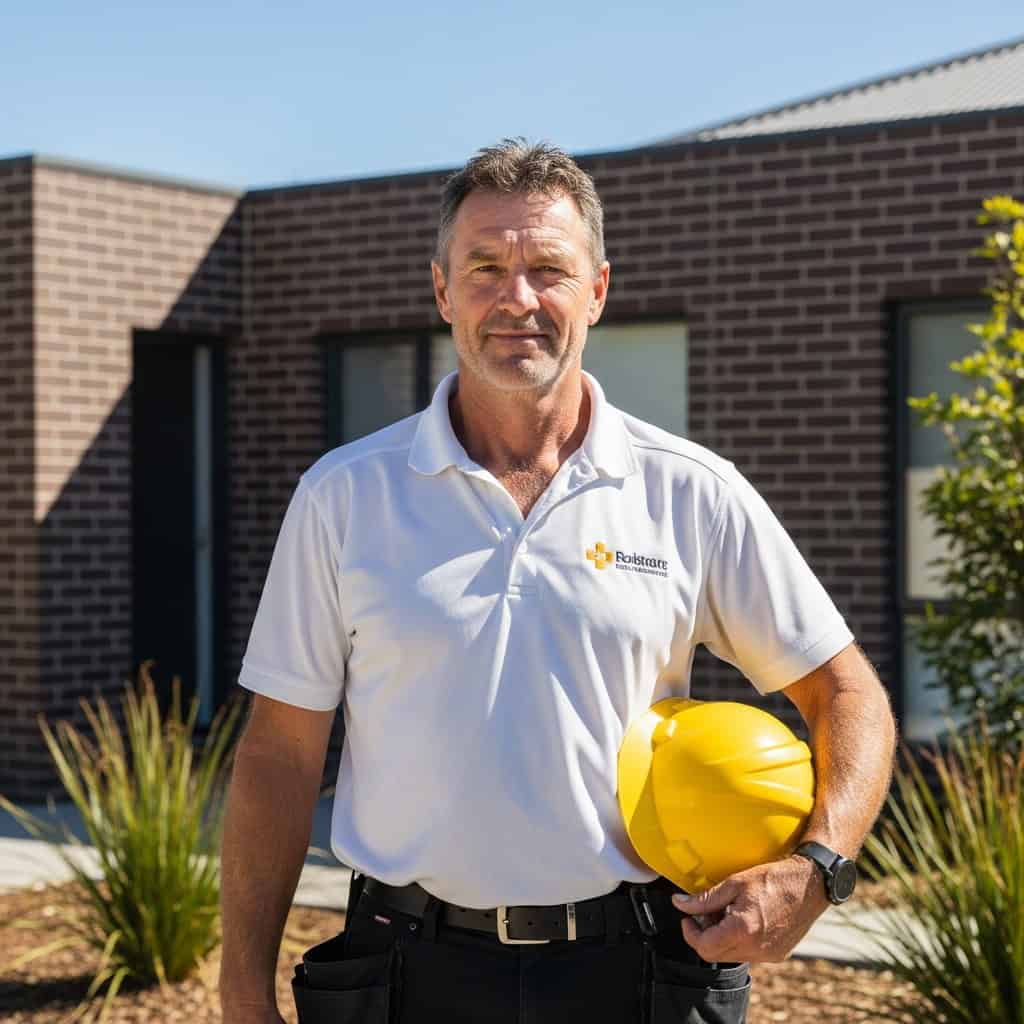

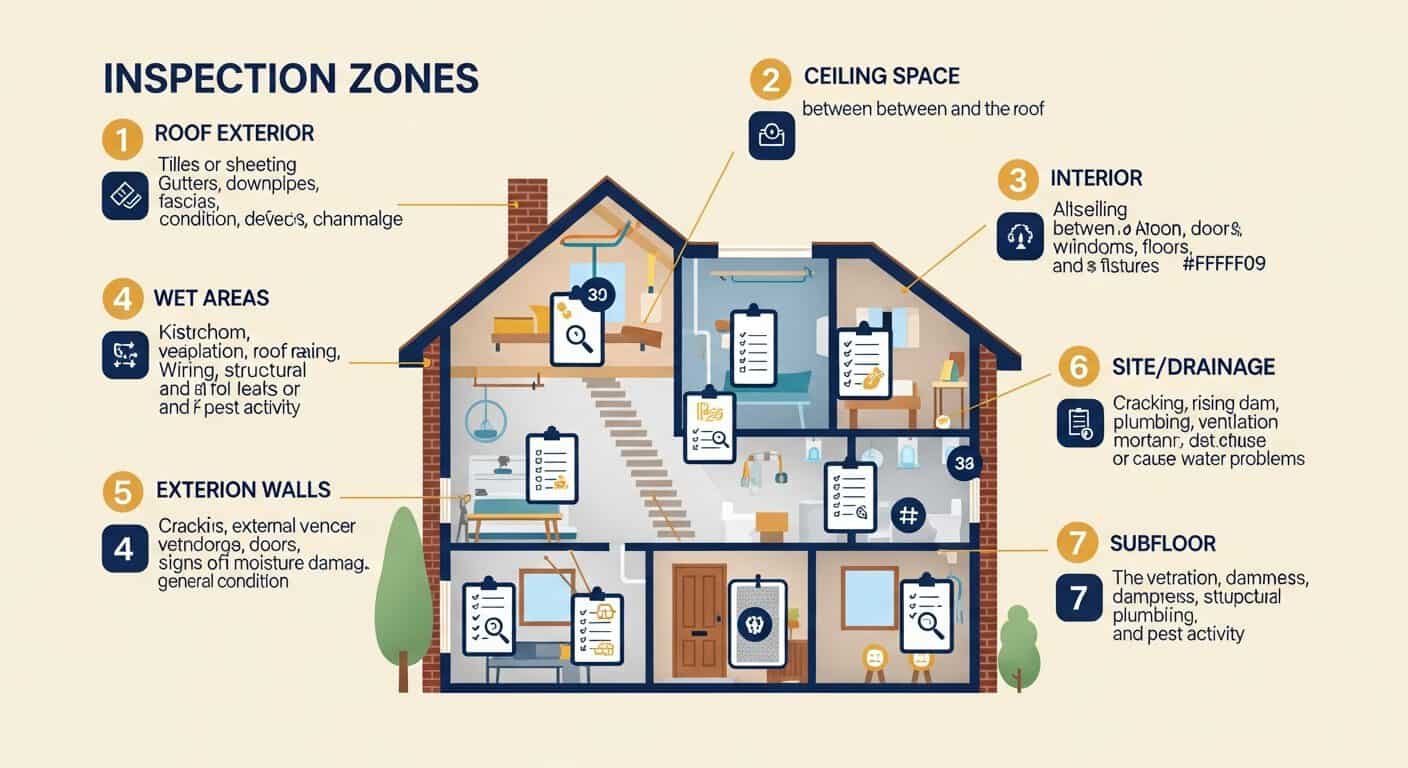
Buying a home is the biggest cheque most people ever write. Before you sign, you want to know what you are buying — not just what the agent’s photos show. A pre-purchase building inspection is the only structured way to see what a fresh coat of paint can hide. I am Michael Tuder, a registered builder with more than 30 years on the tools, and below is exactly what we look at when we walk through a property on your behalf.
Quick answer: A pre-purchase building inspection checks every accessible part of the home — roof exterior, roof void, sub-floor, structure, walls, ceilings, floors, wet areas, doors, windows, balconies, garages, and the site around the building. We also look for visible signs of pest activity, moisture, and movement. The report follows Australian Standard AS4349.1 and is delivered the same day with photos.
The standard we work to
Every Star Building Inspections report is prepared to AS4349.1-2007 (Inspection of buildings — Pre-purchase inspections — Residential buildings). Pest checks follow AS4349.3. The standard sets the rules: what we must inspect, how we describe defects, and what falls outside scope. If an inspector cannot point to the standard they work under, that is a problem.
What we inspect inside the home
Inside, we move room by room. We are not just glancing — we are looking for the small signs that point to bigger issues.
- Walls and ceilings — cracking patterns, water staining, plaster failure, paint blistering, signs of past patching.
- Floors — uneven sections, sloping, soft spots in timber, tile drumminess, vinyl lifting near wet areas.
- Doors and windows — operation, locks, seals, glazing condition, signs of frame movement, lintels above openings.
- Wet areas — bathrooms, ensuites, laundry, kitchen. We check tiling, grout, silicone, taps, drains, and visible waterproofing failure.
- Kitchen — bench condition, cabinet integrity, splashback, range hood vent, sink seal.
- Built-ins and storage — wardrobes, linen, pantry. Often the first place we find moisture, mould, or termite mudding.
What we inspect outside the home
The exterior tells you how the building has weathered, drained, and aged.
- Roof exterior — tiles, ridges, valleys, flashings, gutters, downpipes, chimney, antenna mounts.
- Walls and cladding — render, brickwork, weatherboard, sheet cladding, expansion joints, mortar condition.
- Eaves and fascia — rot, paint failure, fixings, vermin entry points.
- Windows and doors — sealants, lintels, weatherproofing, security screens.
- Decks, balconies and pergolas — structural condition, fixings, balustrade height and gaps, waterproofing.
- Garage and outbuildings — slab, frame, roof, doors, fire separation if attached.
- Site — fencing, retaining walls, paving falls, surface drainage, trees near footings.
The hidden zones — roof void and sub-floor
This is where most defects live, and where most cheap inspections cut corners. We physically enter:
- The roof void (where access is safe and provided) — checking truss or rafter condition, sarking, insulation, plumbing penetrations, electrical, signs of leaks, vermin, and termite tracking.
- The sub-floor (where access exists) — checking bearers, joists, stumps, ant capping, ventilation, moisture, drainage, and pest activity.
If the home is on a concrete slab, the sub-floor inspection does not apply, but we still check the slab edge for cracking and moisture.
Services — what we look at, what we do not
A building inspection is a visual inspection. We do not test or commission services. We do, however, note visible defects and red flags.
| System | What we check | What we do not do |
|---|---|---|
| Electrical | Visible wiring condition, switchboard age, smoke alarms present, exposed cabling | Live testing, compliance audit, certification |
| Plumbing | Visible leaks, tap operation, drainage flow, hot water unit age | Pressure testing, sewer camera, compliance certificate |
| Gas | Visible appliances, flueing, exposed pipework | Leak testing, certification |
| HVAC | Unit presence, age, visible condition | Performance test, refrigerant check |
If anything looks suspect, we say so in plain English and recommend a licensed trade follow up.
Pest activity — what we look for
Need this inspection booked?
Star books inside the cooling-off window. 48-hour turnaround, same-day report, phone walkthrough.
In the same visit, we look for visible signs of timber pests:
- Termite mudding, workings, or live activity
- Damaged or hollow-sounding timber
- Conditions that attract pests (poor drainage, timber-to-ground contact, sub-floor moisture, garden beds against weep holes)
- Borer activity in timber
- Fungal decay (wet rot, dry rot)
Where access is restricted, we say so and recommend further investigation. Termite damage can sit hidden for years, so the conditions matter as much as the visible activity.
What is outside scope
Honest reports list what was not inspected and why. Common exclusions:
- Concealed framing inside walls or floors
- Areas with no safe access (low roof voids, blocked sub-floors, locked rooms)
- Anything obstructed by furniture, stored items, or fixed cabinetry
- Pools, spas, and pool fencing (separate inspection — see our pool safety inspection guide)
- Asbestos sampling and lab testing (we identify suspect materials only)
- Compliance audits, planning, and town-planning matters
What the report looks like
Every Star Building Inspections report includes:
- A summary page — major defects, safety hazards, and recommendations up front
- A defect list grouped by area, with photos
- A condition rating against AS4349.1 categories
- Recommendations for further investigation where required
- The inspector’s name, registration, and signature
You receive the report as a photo-rich PDF on the day of inspection.
Frequently asked questions
How long does a pre-purchase inspection take?
A standard three-bedroom home takes around 90 minutes on site. Larger homes, period homes, and properties with extensive outbuildings take longer. The same-day report is prepared after the site visit.
Should I attend the inspection?
You are welcome to attend the final 20 minutes for a verbal walkthrough. Many buyers find that more useful than the report alone. We will not interrupt the inspection itself — getting the data right comes first.
Does the inspection guarantee the property has no problems?
No inspection can. A visual inspection finds visible and reasonably accessible defects. Hidden issues — concealed framing, slab interior, buried plumbing — sit outside the scope of any standard report. We tell you exactly what we could and could not see.
What if the report finds major defects?
You have options. Buyers commonly use the report to renegotiate price, request repairs as a condition of sale, or walk away. We do not advise on contracts — talk to your conveyancer or solicitor — but we will explain what each defect means in practical terms.
Is a building inspection different from a pest inspection?
They are two distinct inspections under two standards (AS4349.1 and AS4349.3). We do them together as a combined building and pest inspection so you get one report and one fee.
Can I share the report with the agent or vendor?
The report is yours. How you use it is your call. Most buyers share the headline findings during negotiation but keep the full report private.
Book a pre-purchase building inspection
If you are about to sign a contract, get the inspection booked first. Star Building Inspections covers Hoppers Crossing, Werribee, Point Cook, Tarneit, and the rest of Melbourne’s western suburbs. Same-day reports, registered builder on every job.
Read more about our full building and pest inspection service, or call Michael directly on 0412 014 216.
Related reading:
– How much does a building and pest inspection cost in Melbourne?
– 5 defects pre-purchase inspections find in older Melbourne homes
What's included by inspection type
| Inspection zone | Visual only | Standard B+P | Premium VBA |
|---|---|---|---|
| Roof exterior | ✓ | ✓ | ✓ |
| Roof cavity / insulation | ✗ | ✓ | ✓ |
| Subfloor | ~ | ✓ | ✓ |
| Moisture meter on wet areas | ✗ | ✓ | ✓ |
| Termatrac radar | ✗ | ✗ | ✓ |
| Thermal imaging | ✗ | ✗ | ✓ |
| Phone walkthrough of report | ✗ | ~ | ✓ |
What customers say about Star
How we grade defects
The standard buyer pre-purchase inspection often gets booked late — after the 3-day cooling-off period clock has started — and the report comes back too late, or too vague, to use as leverage.
Star books inside the cooling-off window, attends within 48 hours, and writes a report you can actually take to the agent. Photos of every defect, severity grades, and a phone walkthrough so you know what matters before you sign.
Why customers choose Star
Across Melbourne's west
Chain inspectors vs Star
| Factor | Chain inspector | Star (independent) |
|---|---|---|
| Inspector continuity | Rotating staff | Michael every time |
| VBA-registered builder | ✗ | ✓ |
| Report walkthrough | ✗ | yes — phone call |
| Same-day report | ✗ | yes (by 6pm) |
| Cost | $300-450 | $450-650 |
Why book Star Building Inspections?
Star Building Inspections is owned and operated by Michael Tuder — a VBA-registered builder with 20+ years inspecting homes across Melbourne's western corridor. Michael personally attends every inspection, writes every report, and calls every customer to walk them through the findings line by line. No contractors. No rotating staff. No outsourced sign-offs.
Book your pre-purchase inspection
Cooling-off period running? Star books within 48 hours, attends in person, and delivers your report same day.