
Melbourne’s western suburbs have plenty of solid older stock — 1970s brick veneers in Werribee, 80s estates in Hoppers Crossing, weatherboard cottages along the older Werribee River pockets. They make great homes, but they also carry a predictable set of defects. After more than 30 years inspecting Melbourne homes, I see the same five issues turn up again and again. If you are buying anything older than 1990, this is what we look for.
Quick answer: The five most common defects we find in older Melbourne homes are: failed wet-area waterproofing, asbestos in sheet products, aging or non-compliant electrical, termite activity or damage, and structural cracking from settlement or movement. Each is fixable, but each can cost five figures if missed before settlement.
1. Failed wet-area waterproofing
This is the single most common major defect in Melbourne homes built before 2000. Original bathroom and laundry waterproofing was either thin, poorly detailed, or — in many 1970s homes — non-existent under the tiles. Decades of showers and a slow drip is all it takes.
What we find:
- Drumminess in floor tiles — the bond has failed because the substrate is wet
- Dark staining on the underside of the floor (visible from sub-floor or below in double-storey)
- Skirting damage and swollen architraves in adjacent rooms
- Mould behind the tiles showing through grout lines
- Bathroom floor sagging at the shower base
[Image: bathroom floor tile drumminess and grout staining]
Why it matters: a full bathroom strip-and-rebuild in 2026 is $15,000 to $30,000. Buyers who walk past it at inspection wear that cost on their first weekend in the home.
We check every wet area, sound the tiles, look at the underside where access exists, and call out any moisture stain or movement. If we suspect a leak that cannot be confirmed visually, we recommend a moisture meter follow-up.
2. Asbestos in sheet products
Asbestos was used in Australian residential construction up to 1987 and in some products through the late 80s. In Melbourne’s older suburbs, we find it in:
- Eaves linings — flat sheeting under the roof overhang
- Vinyl floor tiles and underlay — especially in laundries and toilets
- Wet-area wall sheets behind tiles in older bathrooms
- Garage and shed walls — corrugated and flat sheeting
- Fence sheeting — older boundary fences in 70s estates
- Switchboard backing and meter box panels
[Image: aged eaves sheet with painted surface — typical asbestos suspect]
What we do: identify suspect materials and call them out in the report. We do not sample or test — that requires a licensed asbestos assessor. Intact, painted, undamaged asbestos is generally low-risk in place. The risk comes when you renovate, drill, cut, or remove it without the right controls.
If you are buying an older home and planning a reno, factor asbestos removal into the budget early. Licensed removal of bonded asbestos in Melbourne typically runs $50 to $90 per square metre, more for friable material.
3. Aging and non-compliant electrical
Electrical safety standards have moved significantly. Many older Melbourne homes still have:
- Original ceramic fuses instead of modern circuit breakers
- No safety switch (RCD) on power or lighting circuits
- Cloth-insulated wiring — the rubber and fabric insulation goes brittle with age and heat
- Aluminium wiring in some 70s builds — known to oxidise at terminations
- Inadequate switchboard capacity for modern loads (split systems, induction cooktops, EV chargers)
- Missing or non-functional smoke alarms
[Image: original switchboard with ceramic fuses and exposed wiring]
What we do: we visually inspect the switchboard, note the age and configuration, check for visible safety switch presence, and confirm smoke alarms are installed in required locations. We do not test, certify, or open the switchboard — that is licensed electrician work.
In the report, we recommend a licensed electrical inspection if we see ceramic fuses, no RCDs, or signs of DIY work. A switchboard upgrade in Melbourne is typically $1,500 to $3,500. A full rewire is $8,000 to $20,000+.
4. Termite activity and damage
The Wyndham corridor and Melbourne’s western suburbs have moderate to high termite pressure. Subterranean termites (Coptotermes, Schedorhinotermes) are the species we find most often. Older homes give them more entry points: aging timber, perished ant capping, garden beds against weep holes, sub-floor moisture.
What we find at inspection:
- Mud tubes on stumps, pier walls, or running up brickwork
- Hollow-sounding timber in skirtings, door frames, and structural members
- Damaged ant capping on stumps
- Active workings in sub-floor timbers
- Conditions conducive to attack — even where no live activity is visible
[Image: mud tubing on stump in sub-floor]
Termite damage in a load-bearing member is not a $500 fix. We have seen homes where the entire bearer system needed replacement after damage went undetected for years. Combined building and pest is essential on any older home — see our post on building and pest inspection costs for why combined is the standard.
If we find activity, we recommend immediate engagement of a licensed pest controller for treatment, followed by a barrier installation. If we find conditions conducive (not active damage), we list them and explain how to remove the risk.
5. Structural cracking — settlement vs movement
Need this inspection booked?
Star books inside the cooling-off window. 48-hour turnaround, same-day report, phone walkthrough.
Every older home cracks somewhere. The job of the inspector is to tell the difference between cosmetic settlement and active structural movement. We classify cracks against the standard categories:
| Category | Crack width | Meaning |
|---|---|---|
| 0 | Hairline (<0.1mm) | Cosmetic, paint repair |
| 1 | Up to 1mm | Minor, routine maintenance |
| 2 | 1–5mm | Visible, monitor for change |
| 3 | 5–15mm or doors/windows binding | Significant, engineer recommended |
| 4 | 15–25mm, structural distortion | Major, structural intervention |
| 5 | >25mm, severe distortion | Severe, possible rebuild |
What drives movement in Melbourne’s west:
- Reactive clay soils — common in Werribee, Hoppers Crossing, Point Cook. Clay expands when wet, shrinks when dry. Drought and heavy rain cycles drive movement.
- Tree roots near footings — a large tree within 1.5× its height of the footing is a known risk
- Plumbing leaks under slabs — softening the soil underneath
- Inadequate footing depth in some older builds
- Failed or absent retaining walls changing site drainage
[Image: stepped crack in brickwork above window head]
We document crack locations, widths, patterns (vertical, stepped, diagonal), and signs of recent movement. If we see Category 2 or above, we recommend a structural engineer’s report before settlement. That is a few hundred dollars well spent.
What to do if your inspection finds these defects
Finding defects is not the end of the deal. Most older Melbourne homes have at least one or two of the issues above, and most are fixable. The buyer’s job is to:
- Read the full report, not just the summary
- Get quotes for the major defects from licensed trades
- Talk to your conveyancer about your options under the contract
- Decide whether to renegotiate, repair as a condition of sale, or walk
What we will not do is tell you to walk away from a 70s home in Werribee or a brick veneer in Hoppers Crossing just because it has an old switchboard. We will tell you what is there, what it costs to fix, and what to ask before you sign.
Frequently asked questions
Are older homes worth buying given these defects?
Often, yes. Older homes are usually on bigger blocks with established trees, in mature streets, and at lower price points than new estates. The trick is buying with full knowledge of what needs spending. A defect you know about is a price negotiation, not a surprise.
Do all older homes have asbestos?
Most pre-1990 Melbourne homes have asbestos somewhere — eaves, wet-area sheets, old vinyl, garage walls. Intact, undisturbed, and painted, it is low risk. Plan around it before renovating.
Can I get a discount on the asking price for these defects?
Buyers regularly use inspection findings to renegotiate. The room to move depends on the market and the contract. Ask your conveyancer.
Is termite damage covered by insurance?
Almost never. Standard home insurance excludes termite damage. A pre-purchase pest inspection plus an annual inspection cycle is the only realistic protection.
How can I tell if cracking is serious without an engineer?
You usually cannot. Cracks above 5mm, doors and windows that bind, or sloping floors are red flags — get an engineer involved. Below 5mm and stable for years is usually movement that has settled.
Do you inspect older homes in Melton, Werribee, and Hoppers Crossing?
Yes — the western suburbs are our core area. We inspect across Werribee, Hoppers Crossing, Point Cook, Tarneit, Melton, and the rest of the Wyndham and Melton corridors.
Book an older-home building inspection
If you are buying an older home in Melbourne’s west, do not skip the inspection — and do not pick the cheapest. A registered builder with 30+ years on the tools sees what a clipboard inspector will not. Read more about our pre-purchase building and pest inspection service, or call Michael on 0412 014 216.
Related reading:
– What does a pre-purchase building inspection actually check?
– How much does a building and pest inspection cost in Melbourne?
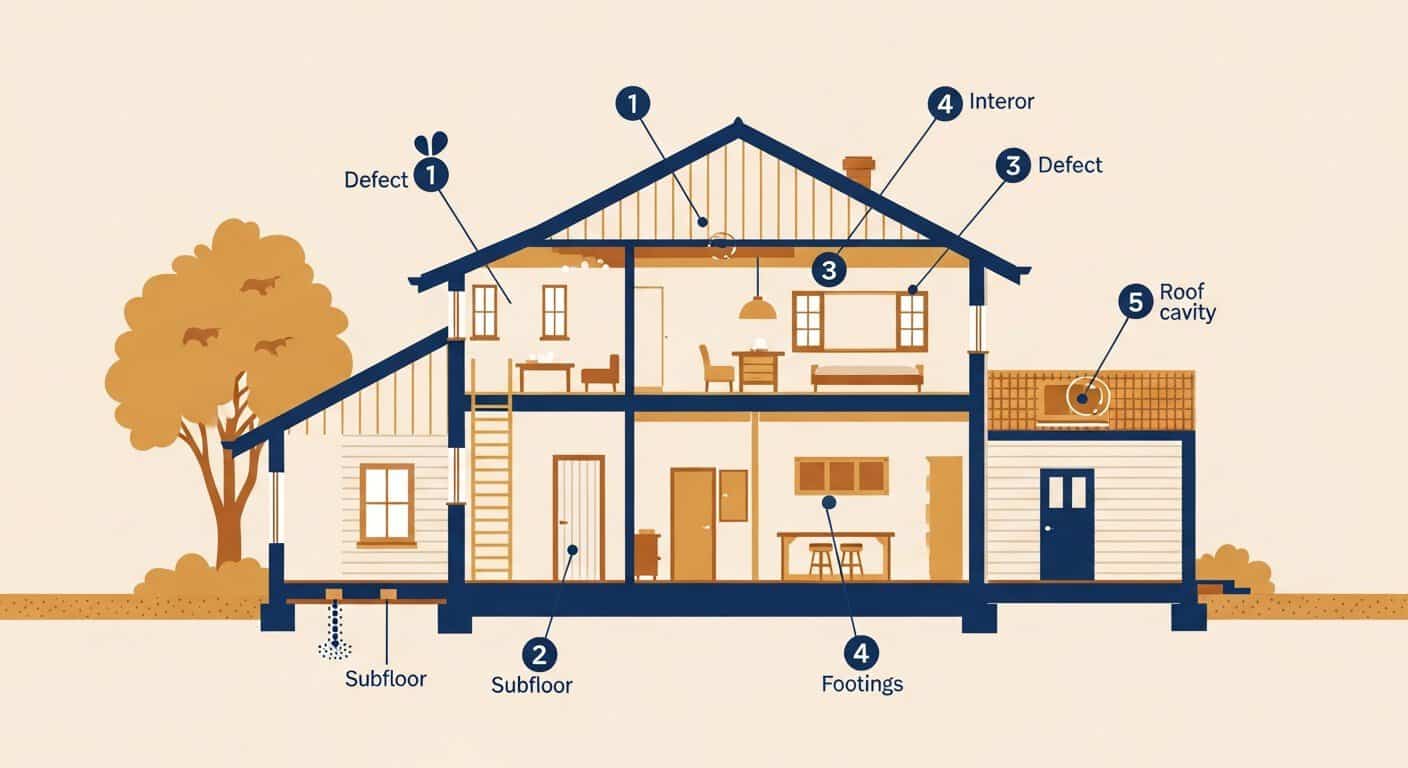
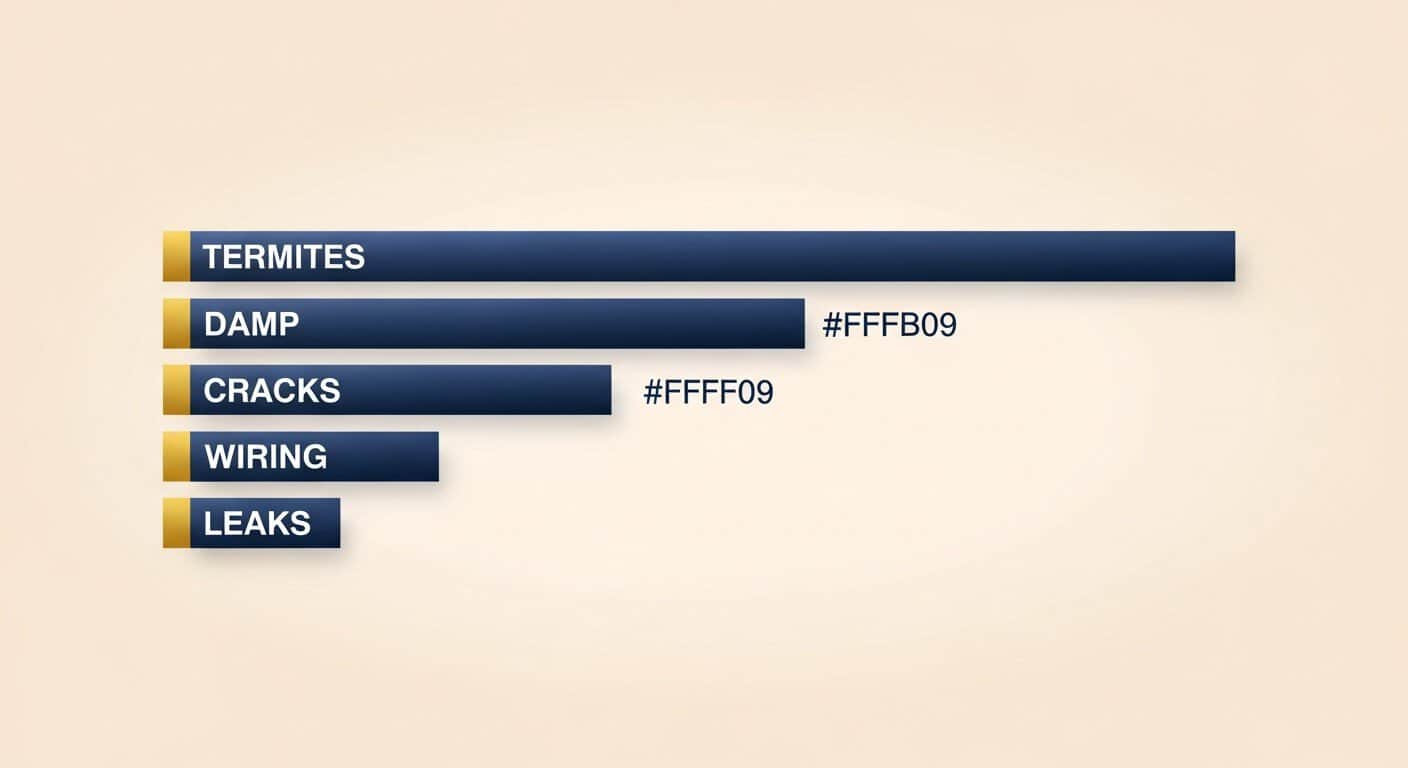
Severity grades for defects in older Melbourne homes
What customers say about Star
When you book Star
The standard buyer pre-purchase inspection often gets booked late — after the 3-day cooling-off period clock has started — and the report comes back too late, or too vague, to use as leverage.
Star books inside the cooling-off window, attends within 48 hours, and writes a report you can actually take to the agent. Photos of every defect, severity grades, and a phone walkthrough so you know what matters before you sign.
How we grade defects
Across Melbourne's west
Why customers choose Star
Why book Star Building Inspections?
Star Building Inspections is owned and operated by Michael Tuder — a VBA-registered builder with 20+ years inspecting homes across Melbourne's western corridor. Michael personally attends every inspection, writes every report, and calls every customer to walk them through the findings line by line. No contractors. No rotating staff. No outsourced sign-offs.
Book your pre-purchase inspection
Cooling-off period running? Star books within 48 hours, attends in person, and delivers your report same day.