
Most sellers think building inspections are the buyer’s problem. They are not. By the time a buyer’s inspector finds a defect, you have lost negotiating leverage — and often the buyer too. A pre-sale inspection flips the order. You find the defects on your terms, fix or disclose them, and go to market with a clean position. I am Michael Tuder, registered builder, and after 30+ years inspecting Melbourne homes, here is when a pre-sale inspection is worth it, when it is not, and what surprises sellers most.
Quick answer: A pre-sale building inspection is worth getting if your home is over 15 years old, has had additions or DIY work, has been a rental, or sits in a competitive price band where buyer inspections will scrutinise it. The cost is typically $400–$650. It pays back when it stops a buyer’s inspection from killing your sale or driving down your price.
The problem pre-sale inspections solve
Here is how property sales usually go wrong. Vendor lists the home. A buyer puts in an offer subject to building and pest inspection. The buyer’s inspector arrives, finds five major defects the vendor did not know about, and the buyer either:
- Walks away (worst case)
- Demands $20,000 off the price (common)
- Demands the vendor repair before settlement (delays the sale)
By the time you get the buyer’s inspection report, you are reacting under time pressure with a price already on the table. Your leverage has dropped. Your timeline is squeezed. Your buyer is suspicious.
A pre-sale inspection moves the discovery to you, before listing. You know what is there. You decide whether to fix, price-adjust, or disclose. You go to market with a documented position.
Who pre-sale inspections suit
Not every home needs one. The case is strongest when:
- The home is over 15 years old. Older homes have more defects, more service systems near end-of-life, more potential surprises.
- There have been additions, renovations, or DIY work. Especially work without permits — buyers’ inspectors find these immediately.
- The home has been a rental. Tenanted properties tend to accumulate maintenance defects, and you may not have visited regularly.
- The home is in a hot price segment. Buyers in $1m+ Melbourne western-suburbs price points scrutinise condition. Defects scare them.
- You suspect issues but do not know the scope. A persistent damp patch, a section of cracking, a roof that always leaks in heavy rain.
- You have a settlement timeline. A long settlement gives you time to fix and re-inspect; a short one does not.
The case is weakest when:
- The home is brand new (still under builder warranty)
- The home has had recent inspections and you have the reports
- The market is so hot you will sell regardless of condition (but this rarely lasts)
What a pre-sale inspection covers
The scope is the same as a pre-purchase inspection — Australian Standard AS4349.1 (building) and AS4349.3 (pest where included).
We inspect:
- Roof exterior, roof void, sub-floor where accessible
- Interior — every room, walls, ceilings, floors, doors, windows
- Wet areas — tiles, grout, silicone, fixtures, drainage
- Kitchen — bench, cabinets, appliances visible, sealing
- Exterior — cladding, render, brick, paint, eaves, fascia
- Site — drainage, paving, retaining walls, fencing
- Visible electrical and plumbing
- Pest activity and conditions conducive
You receive a same-day photo-rich PDF. You then decide what to do with each finding.
How sellers typically use the report
There is no single right approach. The three common strategies:
1. Fix and re-list. Use the report as a punch list. Get quotes from licensed trades, fix the major items, and list with a clean home. Costs upfront, but maximises sale price.
2. Disclose and price accordingly. Provide the report to interested buyers (your agent’s call on timing). Buyers value transparency and your price holds because there are no surprises.
3. Fix the easy stuff, disclose the hard stuff. The pragmatic middle ground. Fix the $200 silicone job. Disclose the structural crack with an engineer’s report attached.
A good agent will help you decide based on the market and the specific property.
What surprises sellers most
About to list your home?
Find your defects before the buyer does. Defends asking price, speeds settlement.
In 30+ years of pre-sale inspections, the same surprises come up.
“I did not know that was leaking.”
Roof leaks, wet-area waterproofing failures, and sub-floor moisture often show first in places sellers do not look — the back of a built-in robe, the underside of an upper-floor bathroom from the sub-floor, behind a piece of furniture that has not moved in years. The buyer’s inspector looks everywhere. So do we.
“We had that fixed.”
Trade work signed off without follow-up sometimes did not actually solve the problem. Roof leaks “fixed” by replacing one tile, when the flashing was the issue. Cracking patched without addressing the underlying movement. Bathrooms tiled over a still-failing membrane.
“The previous owners did the extension.”
Unpermitted extensions and additions show up in the inspection — and they show up in council records too, which buyers’ conveyancers check. If the work was DIY without permits, it becomes a disclosure issue and a price issue.
“We never went up there.”
Roof voids are a common surprise. Possum damage, water staining, electrical that no longer meets standards, ducting that was disconnected during a previous reno and never rejoined.
For the full list of what we typically find at pre-sale, see our post on the top defects pre-sale inspections find.
The Section 32 question
Victoria’s Sale of Land Act requires you to provide a Section 32 vendor’s statement to the buyer, disclosing defined matters about the property. That is a legal disclosure document — your conveyancer or solicitor prepares it. A pre-sale building inspection is not a Section 32 substitute. It is a separate, voluntary, building-condition document.
The two work together. The Section 32 covers the legal disclosures (title, encumbrances, planning, services, notices). The pre-sale inspection covers the physical condition of the building. Both can be provided to a buyer, but they answer different questions.
For more on the line between the two, see our post on vendor disclosure vs vendor inspection.
Cost vs benefit
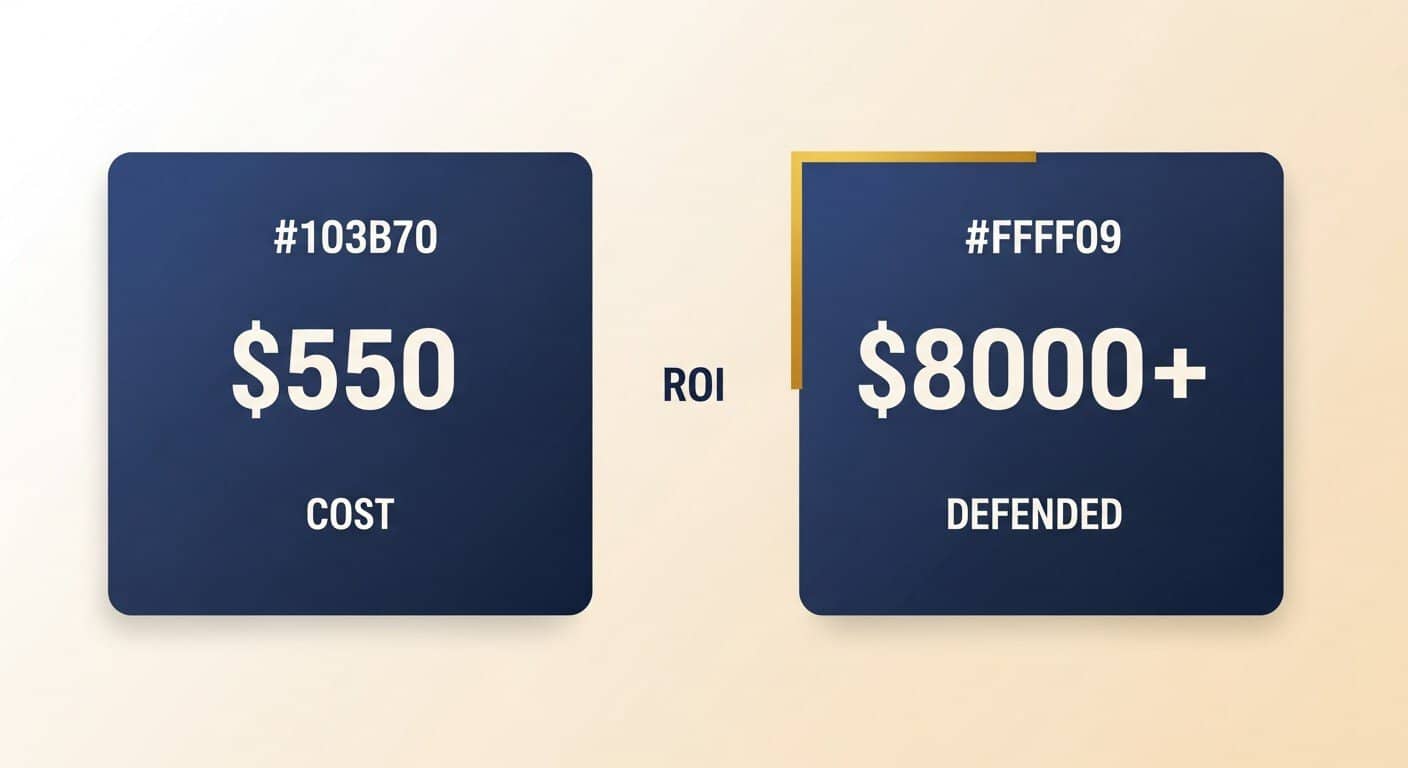
A pre-sale inspection in Melbourne typically costs $400 to $650, the same range as a pre-purchase inspection. The benefit:
- A defect found and fixed before listing avoids a price renegotiation
- Disclosed defects build buyer trust and protect your asking price
- The inspection pre-empts surprises that kill deals at the worst possible time
- For an older home, you can market “inspection-ready” or “condition report available” — a strong signal
The math works as long as the inspection prevents one major price renegotiation or one failed deal. For a typical Melbourne western-suburbs home, that bar is low.
Frequently asked questions
Should I show the report to buyers or just my agent?
That is your agent’s call. Some agents share the report upfront to build trust. Others hold it back until a buyer’s inspection request, then offer the existing report as an alternative. Discuss the strategy before you commission the inspection.
What if the buyer’s inspector disagrees with my pre-sale report?
It happens occasionally. Two registered builders looking at the same defect should reach similar conclusions, but inspectors differ in tone and threshold. If a disagreement arises, the underlying facts (photos, locations, defect categories) usually align. Tone differences are negotiation, not defect substance.
Can I use the same inspection if my home does not sell on the first listing?
Most reports are dated and reflect the property at one point in time. A 6-month-old report is generally fine; a 2-year-old report is not. Re-inspect if substantial time has passed or if work has been done in between.
Will the inspection find things that hurt my sale?
It might. Better that you find them than the buyer. You can still choose how to handle every finding.
Does the inspector tell my agent what they find?
We work for you. The report goes to you. You decide who else sees it.
Do you do pre-sale inspections across Melbourne’s western suburbs?
Yes — Hoppers Crossing, Werribee, Point Cook, Tarneit, Williams Landing, Truganina, and the rest of the Wyndham and Melton corridors. Same-day reports.
Book a pre-sale building inspection
If you are listing a home in Melbourne’s west, get in front of the inspection question rather than reacting to it. Star Building Inspections delivers same-day photo-rich pre-sale reports from a registered builder. Read more about our pre-sale building inspection service, or call Michael on 0412 014 216.
Related reading:
– Top defects pre-sale inspections find that derail home sales
– Vendor disclosure vs vendor inspection: what’s the difference?
Pre-sale inspection — when it pays off
| Your situation | Pre-sale ROI |
|---|---|
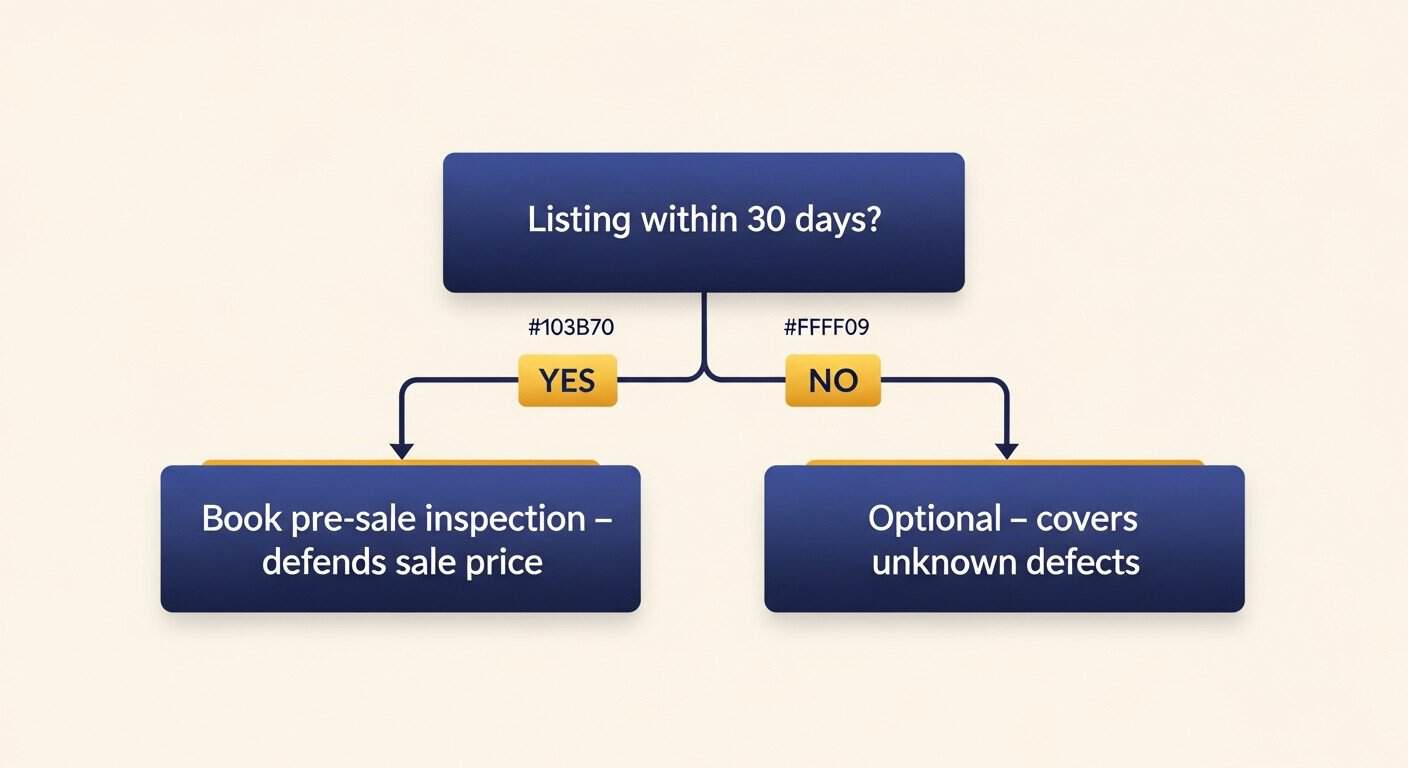
| Selling within 30 days | High — defends asking price |
| Older home (20+ years) | High — defects almost certain |
| New build (under 5 years) | Moderate — proves no defects |
| Strong seller's market | Moderate — speeds settlement |
| Have done recent renovations | High — documents the upgrades |
| Buyer already inspected | Low — they already know |
What customers say about Star
Chain inspectors vs Star
| Factor | Chain inspector | Star (independent) |
|---|---|---|
| Inspector continuity | Rotating staff | Michael every time |
| VBA-registered builder | ✗ | ✓ |
| Report walkthrough | ✗ | yes — phone call |
| Same-day report | ✗ | yes (by 6pm) |
| Cost | $300-450 | $450-650 |
You list, buyers inspect, their report finds 3 issues you didn't know about, and the deal falls over or gets re-negotiated 20k below your asking price.
Star does a pre-sale inspection BEFORE you list. You see the report first, fix what's cheap, disclose what isn't, and remove the buyer's "gotcha" leverage entirely.
When you book Star
Across Melbourne's west
How we grade defects
Why book Star Building Inspections?
Star Building Inspections is owned and operated by Michael Tuder — a VBA-registered builder with 20+ years inspecting homes across Melbourne's western corridor. Michael personally attends every inspection, writes every report, and calls every customer to walk them through the findings line by line. No contractors. No rotating staff. No outsourced sign-offs.
Book a pre-sale inspection
Find your home's issues before the buyer does. Defends asking price, removes the buyer's 'gotcha' leverage, speeds the settlement.