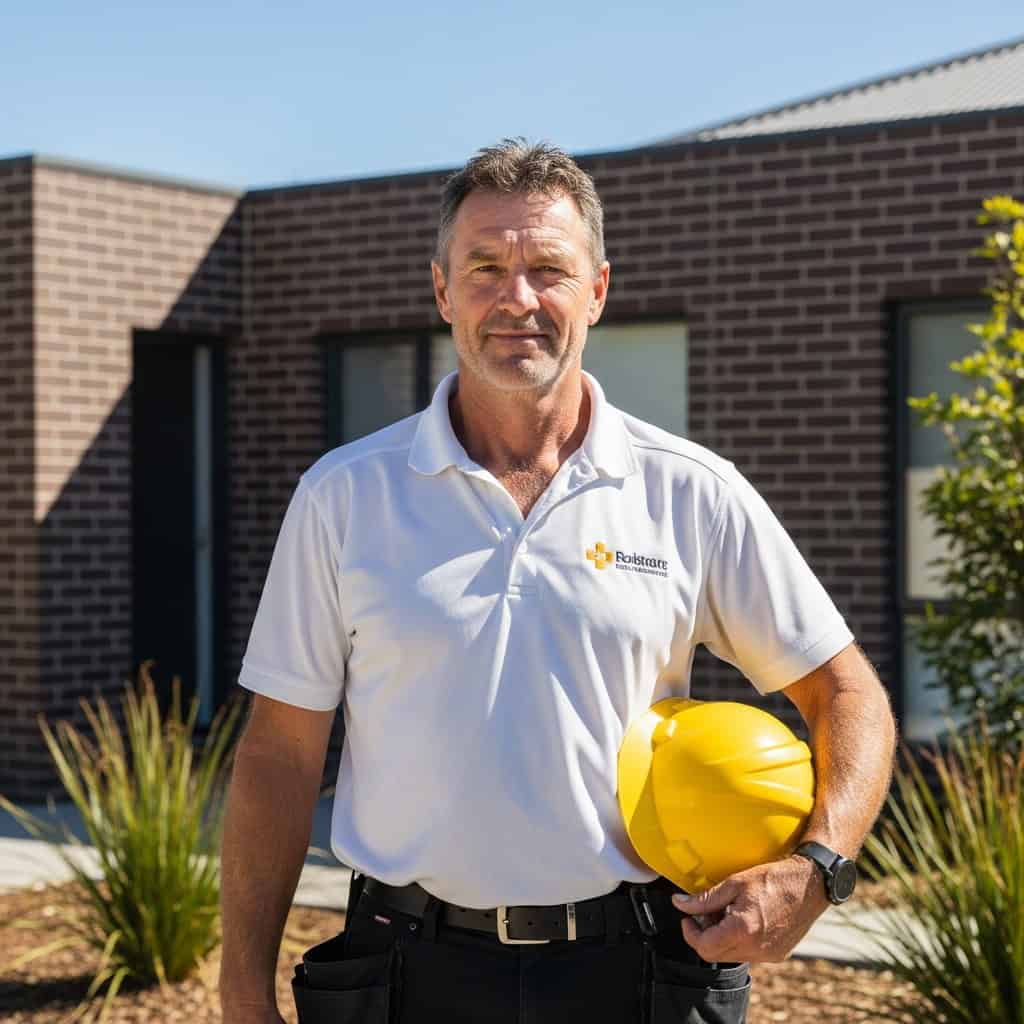

Methamphetamine contamination in residential property is a real but often misunderstood issue. The fear factor is high, the science is technical, and the cost of a false positive — or a missed positive — is significant. I am Michael Tuder, registered builder, and over 30+ years inspecting Melbourne homes I have seen the meth testing question come up across pre-purchase, pre-lease, and pre-renovation work. This post explains the standards, the testing methods, what results actually mean, and the cost reality of decontamination.
Quick answer: Meth testing measures methamphetamine residue on internal surfaces in micrograms per 100 square centimetres (µg/100cm²). The Australian guideline threshold for residential property is 0.5 µg/100cm², drawn from the US NIOSH standard. Field swabs cost from around $50 each and give a screening result. Lab-tested swabs cost more and are admissible evidence. Testing matters most in pre-purchase, pre-lease (rental return), and post-tenancy contexts. Decontamination of a contaminated home can run $20,000–$80,000+.
Why this matters in Australia
Meth contamination occurs in two scenarios:
- Smoking the drug inside the property, depositing residue on walls, ceilings, soft furnishings, and HVAC
- Manufacturing the drug inside the property — far less common but far more contaminating
Smoking residue is what most testing identifies in residential property. Even at low levels, residue absorbs into porous surfaces and is transferred onto skin and into respiratory systems by subsequent occupants. The health concerns are particularly acute for children and immunocompromised people.
The problem in Australia: there is no single national legislative standard. Different jurisdictions reference different thresholds. The widely accepted figure is 0.5 µg/100cm² — a guideline drawn from the US National Institute for Occupational Safety and Health (NIOSH) and adopted in Australian Standard guidance and various state cleanup protocols.
When testing is warranted
You do not need to test every house. Testing makes sense when:
- Pre-purchase — buying a property with unclear tenancy history, an unusually low price, or visible signs of heavy use (unexplained heavy curtains in every window, overpowering air fresheners, recent rapid cosmetic refit)
- Pre-lease (landlord) — confirming a property is clean before a new tenant moves in
- Post-tenancy (landlord) — the previous tenant has moved out, particularly after eviction, abandonment, or police involvement
- Pre-renovation — before opening up walls or removing porous surfaces in a property of unknown history
- Suspected exposure — current occupants report unexplained respiratory or skin symptoms
Casual testing of a recently-built family home on a referral sale is generally not warranted. Pattern matters — most positive results come from properties with red flags before testing.
Field swabs vs lab swabs
There are two practical levels of testing.
Field swabs
A wipe is taken from a defined surface area (typically 100cm²) and tested on a small immunoassay device. Results in 10–15 minutes. Indicates positive or negative against a threshold.
| Field swabs | |
|---|---|
| Cost per swab | $50–$120 |
| Result | Screening only — positive/negative |
| Accuracy | Good for ruling out, less reliable for legal weight |
| Best use | Initial screen, multiple rooms, pre-purchase due diligence |
Lab swabs
A wipe is taken from a defined surface area, sealed, chain-of-custody documented, and sent to a NATA-accredited laboratory. Result is a quantified concentration in µg/100cm².
| Lab swabs | |
|---|---|
| Cost per swab | $80–$180 plus lab fees |
| Result | Quantified concentration |
| Accuracy | High, with documented methodology |
| Best use | Confirmation, legal proceedings, insurance claims |
A common approach: field-swab multiple rooms first, then lab-confirm any positive result before acting on it.
What results mean
Numbers without context are not useful. Here is the framework most decontamination protocols use:
| Result (µg/100cm²) | Interpretation |
|---|---|
| <0.1 | Background, no action |
| 0.1–0.5 | Below threshold but elevated — investigate further, retest |
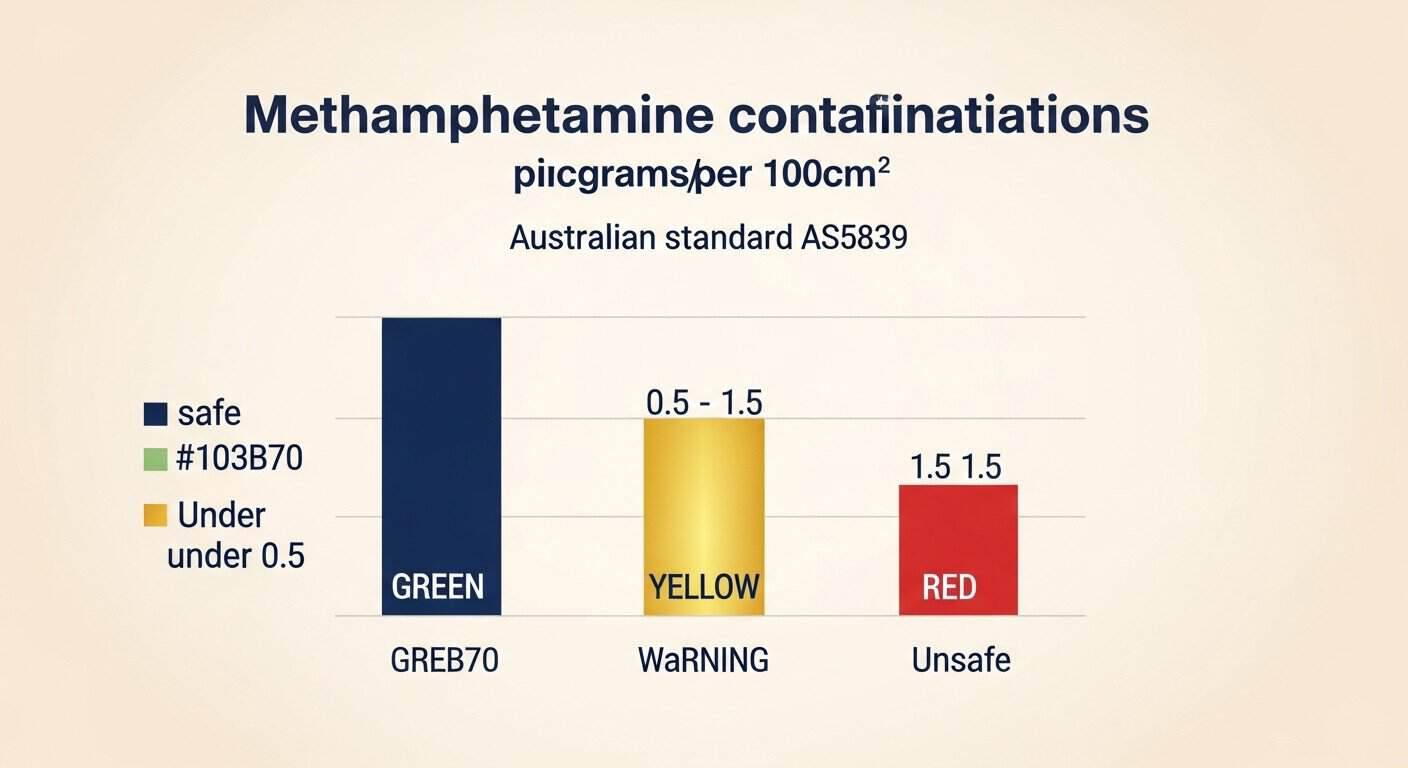
| 0.5–1.5 | Above threshold — surface cleaning likely sufficient |
| 1.5–4.0 | Significant contamination — professional decontamination |
| 4.0+ | Heavy contamination — staged decontamination, possibly partial demolition of porous materials |
A single positive swab in one room rarely means the whole house is contaminated. Pattern across multiple rooms — bedroom, living, ceiling, HVAC — tells a clearer story than one isolated reading.
Where to swab
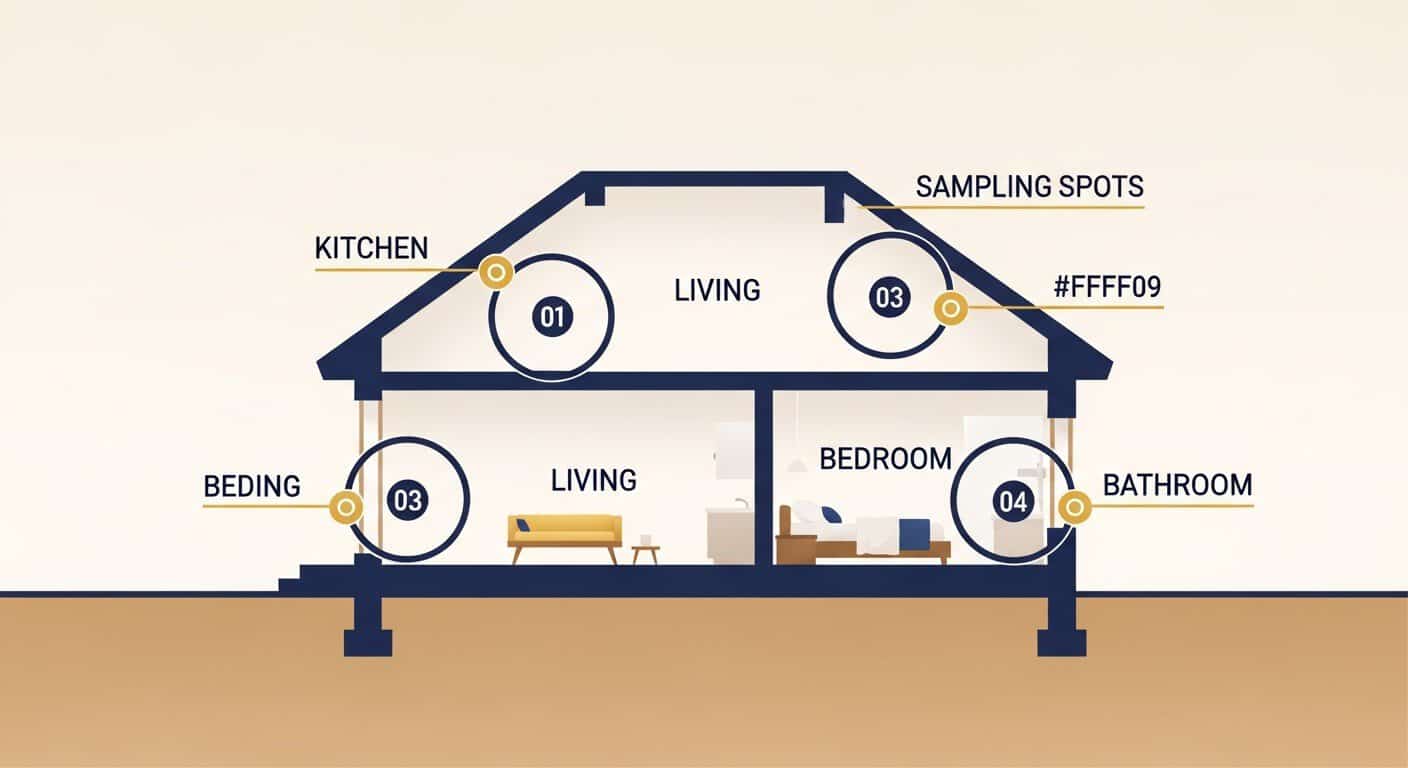
A representative residential test takes swabs from:
- Living room walls and ceiling
- Each bedroom — walls, ceiling, light switches
- Kitchen — walls, range hood filter
- Bathroom — walls, exhaust fan
- HVAC return air filter and ducting interior
- Window architraves (residue often concentrates near smoking spots)
- Inside built-in robes (sealed environments retain residue)
Light switches, door frames, and HVAC components are the highest-yield locations because they trap airborne residue. A test that only swabs central wall surfaces will miss real contamination.
What testing does not do
Need a defensible report?
VBA-registered builder. AS/NCC-referenced. Court-ready if disputed.
Important boundaries:
- Testing identifies methamphetamine residue. It does not identify other drug residues (MDMA, cocaine, fentanyl) — those need separate panels.
- A negative test does not certify the property as “clean” forever — it reflects condition at the time of testing.
- Testing does not establish how the residue got there or who deposited it.
- Testing does not prove manufacture vs smoking — that distinction comes from broader investigation.
If you suspect a former clandestine lab (different from a smoking environment), that is a forensic investigation, not a residential test. Look for additional indicators: chemical staining, ventilation modifications, unexplained plumbing, heavy outbuilding use.
Decontamination cost reality
If a property tests positive at residential-action levels, decontamination is the next step. Costs vary widely by extent:
- Light contamination, surface clean only — $5,000–$15,000. Hard surface wash, paint, HVAC clean, retest.
- Moderate contamination — $15,000–$40,000. Replace porous materials (carpet, soft furnishings, possibly plasterboard in heavily affected rooms), seal hard surfaces, repaint, HVAC replacement of filters and clean of ducts, retest.
- Heavy contamination or former lab — $40,000–$100,000+. Strip porous materials wholesale, possibly demolition of contaminated sections, full HVAC replacement, complete substrate sealing, multiple retest cycles.
A landlord who finds contamination after a tenancy faces a hard decision: pay to decontaminate, or sell as-is with disclosure. The market discount for an undecontaminated meth-positive property is severe — often more than the decontamination cost.
Insurance and meth testing
Some Australian insurers cover meth contamination as part of malicious damage. Cover varies enormously between insurers and policies. If you are a landlord, check your policy now — not after you find a problem. Test results are typically required to lodge a claim.
Frequently asked questions
Should I test before buying every property?
No. Test where there are red flags — short tenancy history, low price relative to area, signs of heavy occupancy, vendor reluctance to provide tenancy history. For most family-owned homes, testing is not warranted.
Can I do my own field-swab kit from a hardware store?
DIY kits exist. They are useful for an initial gut-check in your own home. They are not sufficient evidence for a transaction or legal matter — the chain of custody and methodology fall short. Use a qualified inspector for anything that matters.
Does meth testing form part of a standard pre-purchase inspection?
No. Standard pre-purchase inspections under AS4349.1 cover building condition. Meth testing is a separate scope, separate fee, and separate document. We can arrange it alongside a building inspection on request.
What if a previous tenant smoked tobacco or cannabis — does that show up?
No. Meth testing is specific to methamphetamine. Tobacco and cannabis residues are different chemistries.
Can a positive result be used to terminate a lease?
Tenancy law and lease termination depend on the specific situation and jurisdiction. Talk to your property manager and solicitor. Test results are evidence; how they are used is a legal question.
Do you do meth testing in Werribee, Hoppers Crossing, and the Melton corridor?
Yes — across Melbourne’s western suburbs. We screen with field swabs and arrange lab confirmation through accredited labs where required.
Book a meth test
If you have a reason to test — a property purchase, a tenancy turnover, a landlord concern, a renovation that will disturb porous surfaces — get it done before you commit. Star Building Inspections arranges meth testing across Melbourne’s west, with screening and lab-confirmed results. Read more about our special purpose inspections, or call Michael on 0412 014 216.
Related reading:
– Dilapidation reports — when do you need one?
– Pool safety inspections in Victoria — the CIS Form 23 explained
Meth contamination thresholds — Australian Standard AS5839
What customers say about Star
Why customers choose Star
Dilapidation, pool safety, owner-builder, meth — these reports need to stand up to lawyers, councils, and insurers. A generic checklist inspector won't cut it.
Star is a VBA-registered builder. Every special-purpose report references the specific Australian Standard, NCC clause, or council requirement that applies — written to be defensible if disputed.
Chain inspectors vs Star
| Factor | Chain inspector | Star (independent) |
|---|---|---|
| Inspector continuity | Rotating staff | Michael every time |
| VBA-registered builder | ✗ | ✓ |
| Report walkthrough | ✗ | yes — phone call |
| Same-day report | ✗ | yes (by 6pm) |
| Cost | $300-450 | $450-650 |
Across Melbourne's west
When you book Star
Why book Star Building Inspections?
Star Building Inspections is owned and operated by Michael Tuder — a VBA-registered builder with 20+ years inspecting homes across Melbourne's western corridor. Michael personally attends every inspection, writes every report, and calls every customer to walk them through the findings line by line. No contractors. No rotating staff. No outsourced sign-offs.
Book a special-purpose inspection
Dilapidation, pool safety, owner-builder, meth — every report is AS/NCC-referenced and defensible if disputed.